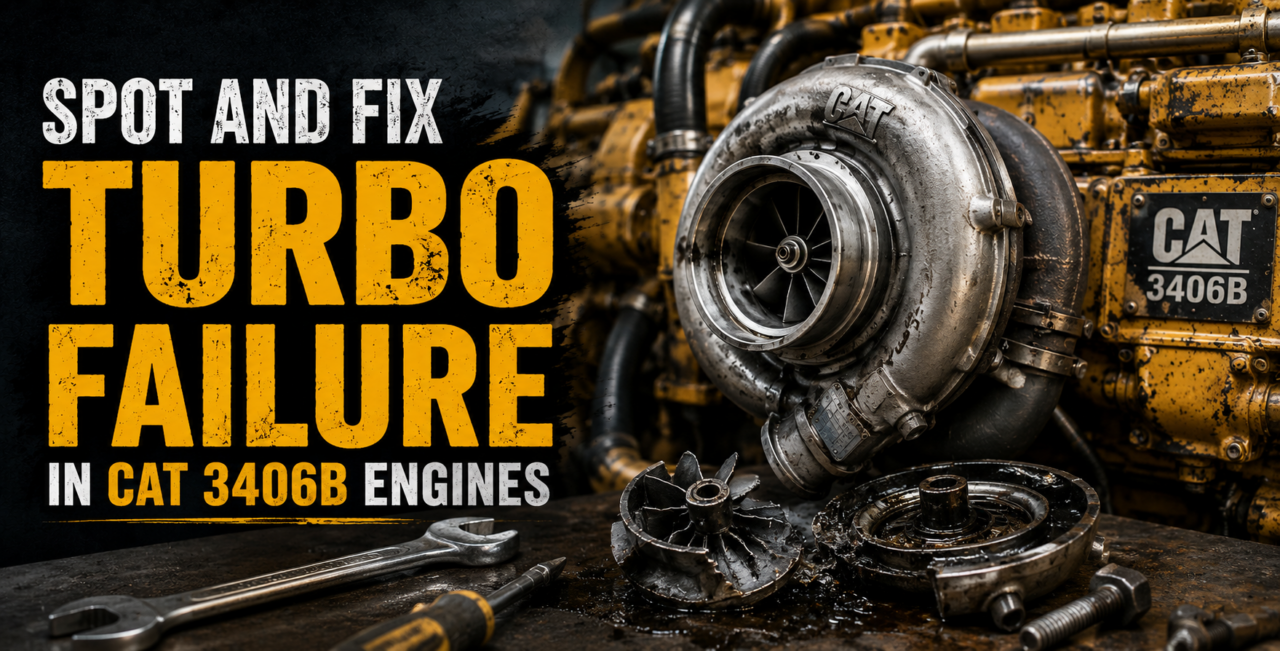
wner-operators and fleet managers relying on the Caterpillar 3406B, the engine is the heartbeat of the operation. Known for its legendary durability, the 3406B remains a staple in heavy-duty hauling and industrial applications. However, even the most robust iron eventually faces wear. When the turbocharger begins to fail, the result isn’t just a loss of power—it is a cascading series of mechanical risks that can lead to catastrophic engine failure and thousands of dollars in unplanned downtime.
Maintaining peak efficiency requires more than just oil changes; it requires a keen eye for the subtle warning signs that a turbo is reaching the end of its service life.
Identifying the Warning Signs of Turbo Degradation
Turbocharger failure rarely happens instantaneously. Instead, it usually manifests as a gradual decline in performance. If you wait until the engine completely loses boost, you are likely looking at a much more expensive repair bill involving internal engine components.
The Tell-Tale Signs of Wear
The first indicator is often a noticeable drop in fuel economy. When a turbo fails to compress air efficiently, the air-to-fuel ratio is disrupted, forcing the engine to burn more fuel to maintain the same speed. This is often accompanied by a “sluggish” feel during acceleration or when climbing steep grades.


Secondly, keep a close eye on your exhaust. While a small amount of smoke is normal during a cold start, consistent blue or black smoke under load suggests a problem. Blue smoke typically indicates that oil is leaking past the turbo seals and into the exhaust stream, while excessive black smoke points to a lack of oxygen (boost) reaching the combustion chamber.
Auditory Clues
Experienced operators listen for the “siren” effect. A high-pitched whining or whistling sound often signals that the compressor wheel is rubbing against the housing or that the bearings are worn. If you hear a loud “pop” followed by a sudden loss of power, you may have suffered a catastrophic wheel failure, which requires an immediate shutdown to prevent metal shards from entering the intake.
Preventing Total Engine Failure
A failing turbo is a liability. If the seals fail completely, engine oil can be pushed into the intake manifold. In certain conditions, this can lead to “engine runaway,” where the engine begins to run on its own lubricating oil, accelerating to maximum RPMs regardless of throttle position until the engine physically seizes or explodes.
To prevent this, a rigorous inspection routine is mandatory. Check for oil pooling in the charge air cooler (CAC) pipes. If you find significant oil residue where there should only be air, the turbo seals are compromised.
When it comes time for a replacement, sourcing a high-quality 3406B Turbo is critical. Installing a low-grade or improperly spec’d unit can lead to overheating and premature failure, effectively doubling your downtime.
Optimizing Longevity After Installation
Once a new turbo is installed, the goal shifts from recovery to prevention. The lifespan of a turbocharger is almost entirely dependent on lubrication and heat management.
The Critical Role of Oil Quality
The turbocharger spins at incredibly high speeds, and the bearings rely on a thin film of oil to prevent metal-on-metal contact. Any contamination in the oil—such as soot or metal shavings—acts like sandpaper on the bearings. Using high-quality synthetic oils and adhering to strict filtration intervals is the cheapest insurance policy an owner can buy.
Managing Thermal Shock
Heat is the enemy of the turbo. Rapid temperature swings can cause the turbine housing to crack or the shaft to warp. To mitigate this, implement a mandatory “cool-down” period. After a heavy haul or a long period of high-load operation, allow the engine to idle for three to five minutes before shutting it off. This allows the oil to continue circulating and carry heat away from the turbo bearings, preventing the oil from “coking” or baking onto the shaft.
Inspecting the Air Intake
A turbo is only as good as the air it can breathe. A clogged air filter forces the turbo to work harder to pull in air, creating a vacuum effect that can actually suck oil past the seals. Ensure your intake system is airtight; a small leak in a boot or a loose clamp can introduce unfiltered dust directly into the compressor wheel, leading to rapid erosion of the blades.
By focusing on these preventative measures and recognizing the early symptoms of wear, operators can ensure their 3406B continues to deliver the torque and reliability the platform is famous for, without the risk of sudden, costly breakdowns.