The U.S. solar market is on a strong upward trajectory. According to Mordor Intelligence, the United States solar energy market in terms of installed base is expected to grow from 269.54 GW in 2026 to 453.37 GW by 2031, at a CAGR of 10.96%. Utility-scale projects commanded 73% of capacity in 2025.[1]
Against the backdrop, it becomes more important to select the right inverter manufacturer. This article helps businesses select the right inverter manufacturers for utility-scale ground-mounted solar projects in the United States.
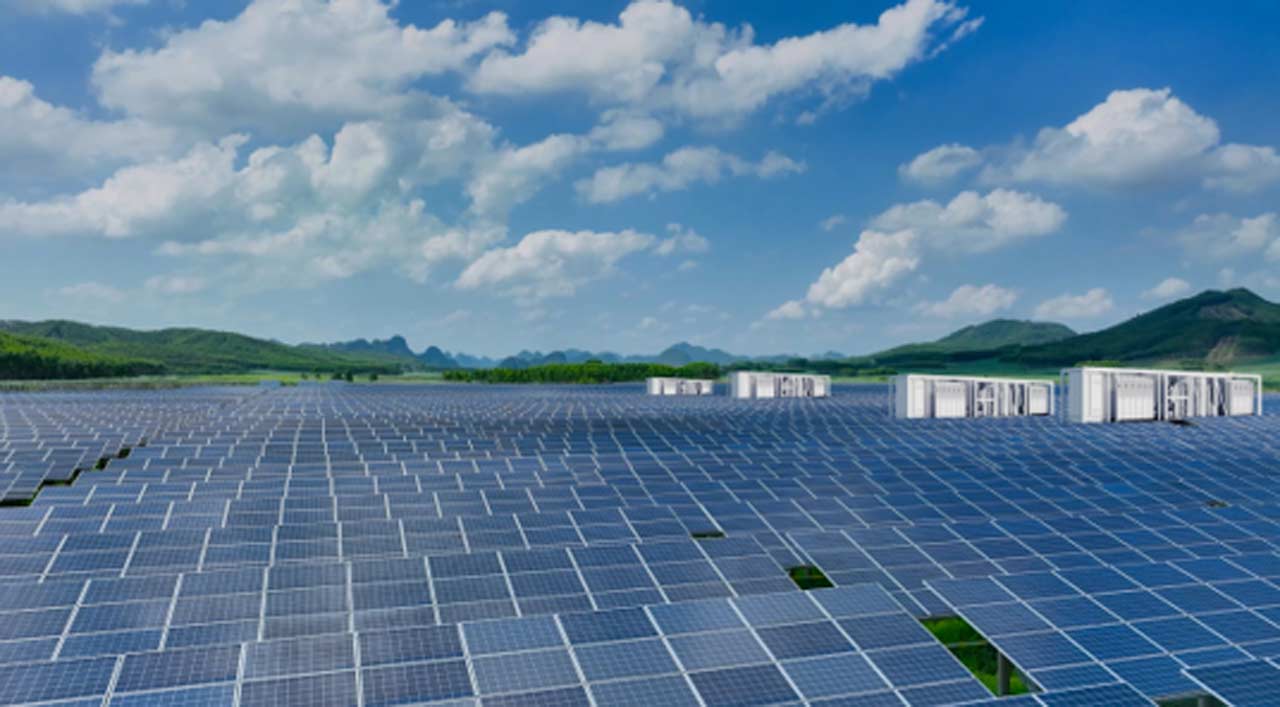
Sungrow
Sungrow is the world’s No. 1 PV inverter manufacturer by shipments, according to S&P Global Commodity Insights, with over 740 GW of power electronic converters installed across more than 180 countries as of December 2024. BloombergNEF also recognizes Sungrow as the world’s most bankable energy storage company.
Its utility-scale product, the 1+X 2.0 Modular Inverter, offers scalable output from 800 kW to 9.6 MW (via up to 12 parallel modules), stable full-power output at temperatures up to 52°C, and intelligent fault detection capable of identifying over 20 fault types in real time.


The inverter’s grid-forming technology enables equivalent inertia support within five milliseconds and withstands transient overvoltages up to 1.8 times the rated voltage.
On the project side, Sungrow’s credentials are substantial. A 1 GW project in the Middle East equipped with the 1+X grid-forming technology achieved grid connection 30 days ahead of schedule, generating an additional $2.9 million in revenue and significantly reducing LCOE. Sungrow has also powered large-scale ground-mounted projects across the U.S., Australia, India, and beyond.
SMA
Germany’s SMA Solar Technology is one of the most established names among utility-scale inverter suppliers globally, with decades of large-scale project experience across Europe and North America. SMA has begun local final assembly of its Medium Voltage Power Station in the U.S., with first domestic projects expected in early 2026, a move designed to shorten project timelines, reduce shipping complexity, and support domestic content strategies under the Inflation Reduction Act. Its Sunny Central product line remains a widely deployed solution in ground-mounted utility projects worldwide.
Huawei
Huawei FusionSolar is a globally recognized name in solar inverter technology, known for its advanced string inverter architecture, AI-powered smart management system, and strong digital monitoring capabilities. The company holds a significant share of the global inverter market and has a broad portfolio of utility-scale solutions deployed across multiple continents.
SolarEdge
SolarEdge brings module-level power electronics to the utility-scale segment through its TerraMax platform. The 330 kW inverter achieves 99% efficiency with 200% DC oversizing and reduces balance-of-system costs through fewer, longer strings. Its optimizer-based architecture delivers strong performance on uneven terrain and shading-prone sites.
Sineng Electric
Sineng ranks No. 4 globally in PV inverter shipments according to S&P Global Commodity Insights, and carries a BloombergNEF Tier 1 bankability rating. Its first utility-scale installation in the U.S., a transmission-scale project in Texas, was completed in 2025, backed by a newly established North American service center. Its utility-scale portfolio spans string inverters, central inverters, and MV turnkey stations.
Key Factors to Evaluate When Selecting a Utility Scale Inverter
1. Energy Yield: The Revenue Driver
At the utility scale, even a fraction of a percentage point in efficiency translates into significant revenue differences over a 25-year asset life. Look beyond peak efficiency ratings and ask for energy yield simulations under real operating conditions, factoring in temperature coefficients, partial load performance, and local irradiance profiles. Inverter manufacturers with proven field data from comparable projects will always be more reliable guides than datasheet figures alone.
2. Grid Compliance: A Non-Negotiable Baseline
U.S. utility-scale projects must meet IEEE 1547-2018 and UL 1741-SA requirements, as well as any additional interconnection standards set by the relevant ISO or RTO. Grid-forming capability is becoming an increasingly important differentiator as grid operators seek more inverter-based grid support. Confirm that any manufacturer under evaluation holds active certifications for the specific U.S. interconnection region where the project will operate.
3. Failure Rate: The Hidden Cost Driver
Inverter downtime directly reduces energy yield and can trigger contractual penalties. When evaluating inverter manufacturers, request field failure rate data rather than just design-stage MTBF (mean time between failures) estimates. A modular architecture that allows component-level swap-out without full unit replacement, such as those offered by Sungrow’s 1+X platform, can significantly reduce both downtime duration and O&M costs over the project’s operational life.
4. Service Network: The On-the-Ground Reality
A technically excellent inverter from a manufacturer with limited field presence is a liability, not an asset. Evaluate the number of service technicians, warehouse locations, and average response times for the region where the project is located. Manufacturers with established local operations, dedicated local technical teams, and stocked spare parts inventories will deliver far better long-term outcomes than those relying on remote support from overseas headquarters.
5. Digital Platform: The Intelligence Layer
Modern utility-scale PV plants require real-time visibility across thousands of inverters. A robust monitoring and O&M platform should provide plant-level and device-level performance data, automated fault alerts, IV curve scanning, and remote firmware update capability. The quality of a manufacturer’s digital platform has a direct impact on O&M cost per MWh, a factor that compounds significantly across a multi-decade asset life.
6. Cybersecurity: The Overlooked Risk
As inverters become grid-connected, internet-accessible devices, their cybersecurity posture becomes a material concern for both project owners and grid operators. Evaluate each manufacturer’s data governance policies, remote access architecture, and compliance with relevant U.S. cybersecurity frameworks. For federally financed or grid-adjacent projects, this is a procurement criterion that lenders and offtakers will increasingly scrutinize.
Conclusion
No single manufacturer is the right fit for every utility-scale ground-mounted project. The right choice depends on project size, site conditions, interconnection requirements, financing structure, and long-term O&M strategy. That said, the strongest candidates combine proven field performance, a credible U.S. service presence, a bankable financial profile, and a clear product roadmap that keeps pace with evolving grid requirements.
Sungrow stands out across all of these dimensions with the world’s largest inverter shipment volume, a growing North American footprint, and a utility-scale product line that addresses everything from grid compliance to AI-driven O&M. If you are evaluating inverter manufacturers for an upcoming project, visit sungrowpower.com to explore Sungrow’s utility-scale solutions or connect with the team directly.
Reference
- https://www.mordorintelligence.com/industry-reports/united-states-solar-energy-market
- https://www.solarpowerworldonline.com/2025/04/sungrow-releases-new-modular-800-kw-utility-scale-inverter/