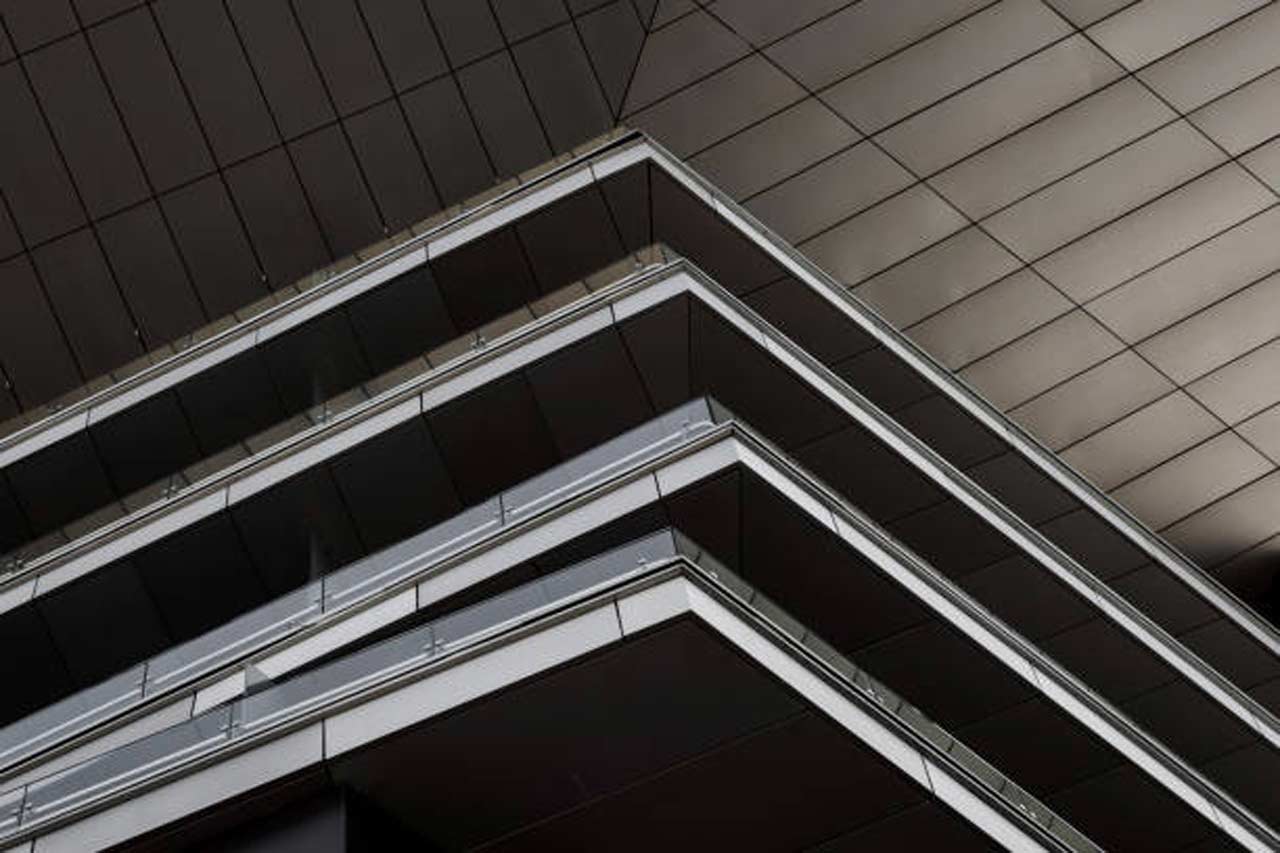
The evolution of contemporary architecture has been shaped not only by design imagination but also by material innovation. Among the materials redefining modern construction aesthetics and functionality is the aluminium composite panel.
Originally popularized as a lightweight façade cladding solution, the aluminium composite panel has steadily expanded into diverse applications across commercial, residential, institutional, and retail projects. 10 Innovative Applications of Aluminium Composite Panels in Modern DesignIts sandwich construction, comprising aluminium skins bonded to a specialized core, provides structural stability, dimensional consistency, and surface versatility.
Today, architects and designers are leveraging this engineered material in ways that go far beyond conventional cladding.
Below are ten innovative applications of aluminium composite panels transforming modern design.


1. High-Performance Ventilated Façades
The most prominent application of aluminium composite panels remains in ventilated façade systems. In contemporary high-rise buildings, ACP-based rainscreen assemblies improve thermal behavior by allowing air circulation behind the cladding.
Lightweight panels reduce dead load on the building structure, while precision fabrication supports clean lines and seamless elevations. Fire-retardant grades further enhance suitability for tall structures where reaction-to-fire compliance is critical.
2. Parametric and 3D Elevation Systems
Modern design increasingly embraces parametric geometries and sculpted surfaces. Aluminium composite panels can be routed, folded, and fabricated into complex shapes, making them compatible with three-dimensional façade concepts.
Curved surfaces, angular projections, and layered elevations are achievable without excessive structural burden. This makes ACP systems suitable for iconic corporate offices, airports, and cultural institutions seeking visual distinction.
3. Contemporary Retail Storefronts and ACP Board Signage
Retail architecture demands bold visual identity. The use of acp board systems in storefront elevations and branding elements has become widespread due to their smooth finish and adaptability.
ACP panels serve as durable substrates for vinyl graphics, channel letters, and illuminated signage. Compared to traditional metal boards, they offer superior flatness and weather resistance, maintaining brand consistency across franchise networks.
4. Interior Feature Walls and Statement Panels
Beyond exteriors, aluminium composite panels are increasingly used for interior feature walls in commercial offices, hospitality spaces, and residential projects.
Brushed metallic finishes, stone-inspired textures, and wood-look coatings allow designers to replicate premium materials while maintaining lighter weight and easier installation. These panels offer dimensional stability and clean detailing in high-traffic environments.
5. False Ceilings and Soffit Applications
ACP systems are being integrated into false ceiling designs for airports, metro stations, corporate lobbies, and retail environments.
The lightweight nature of aluminium composite panels simplifies overhead installation, while their rigidity ensures minimal sagging over time. Panels can be perforated for acoustic performance or integrated with lighting systems for cohesive ceiling aesthetics.
6. Column Cladding and Structural Wrapping
Structural columns in commercial buildings often require aesthetic enhancement. Aluminium composite panels provide a practical solution for column cladding, delivering smooth cylindrical or faceted finishes.
Their formability allows precise wrapping, and consistent surface quality ensures visual continuity across large spaces such as shopping malls and exhibition centers.
7. Canopies and Entrance Portals
Entrance zones define first impressions. Aluminium composite panels are widely used in canopy systems and entrance portals due to their weather resistance and clean appearance.
Prefabricated ACP trays can be assembled with concealed fixing systems, providing a sleek look without visible fasteners. Their resistance to corrosion and UV exposure makes them suitable for outdoor exposure in diverse climatic conditions.
8. Transportation and Infrastructure Projects
Airports, metro stations, bus terminals, and railway stations increasingly rely on aluminium composite panels for wall cladding, soffits, and signage structures.
The material’s strength-to-weight efficiency simplifies installation across expansive surfaces. Fire-retardant variants align with safety requirements in public infrastructure where occupant density is high.
9. Modular Partitions and Interior Dividers
Modern office layouts prioritize flexibility. Aluminium composite panels are used in modular partition systems that balance privacy with aesthetic refinement.
Compared to heavier alternatives, ACP-based partitions are easier to install and reconfigure. The panels offer water resistance and ease of maintenance, making them suitable for washroom partitions and service areas as well.
10. Decorative Screens and Sun-Shading Elements
Solar control has become integral to sustainable building design. Aluminium composite panels can be fabricated into perforated screens and shading fins that regulate light penetration while enhancing façade character.
These elements contribute to glare reduction and heat control while creating layered depth on building exteriors. Designers increasingly incorporate ACP-based screens to merge functionality with visual interest.
Why Aluminium Composite Panels Continue to Expand in Use
The adaptability of the aluminium composite panel stems from several core advantages:
- Lightweight construction that reduces structural load
- Smooth, consistent surface suitable for coatings and graphics
- Ease of routing, bending, and fabrication
- Compatibility with concealed fixing systems
- Availability in fire-retardant grades
- Weather resistance with PVDF or similar coatings
As design trends evolve toward sustainability, modularity, and parametric expression, ACP systems provide a balanced solution between engineering efficiency and architectural creativity.
Conclusion
The aluminium composite panel has evolved from a conventional cladding material into a versatile design component across multiple sectors. From ventilated façades and parametric elevations to interior partitions and acp board signage systems, its applications reflect the changing demands of modern architecture.
As architects and developers continue to seek materials that combine performance, flexibility, and visual impact, aluminium composite panels are poised to remain central to innovative design practices in the years ahead.