For older adults who want to remain in their own homes, technology is creating new possibilities for independent living. Medical alert systems, smartwatches, home sensors, voice-controlled assistants and increasingly sophisticated monitoring tools are changing how people manage everyday life as they age, especially helping to avoid constant supervision or a move into a care facility.
Beyond Wearables
Medical alert systems remain among the most established technologies for supporting independent living. Traditional in-home systems use a base station connected to a monitoring service, with a wearable pendant or wrist button allowing the user to summon help. Mobile systems extend that protection beyond the home through cellular connectivity and GPS location services.
The technology has evolved considerably. Modern devices can include automatic fall detection, two-way voice communication and location tracking, while some smartwatches combine emergency calling with activity monitoring, heart-rate measurements and other health-related functions. These features can help older adults maintain active lives without having to carry a phone everywhere.
The larger trend is toward wearable technology that does more than respond to an emergency. By collecting information about activity, sleep, heart rate and movement, some devices can help users recognize changes in their routines or health. Such information may be useful to healthcare professionals, although not sufficient to replace medical diagnostic equipment.

Smart Home Technology
In-home technology offers another approach: monitoring the environment and detecting potential problems without requiring someone to wear or operate a device. Alan Wu, Chief Marketing Officer of Bay Alarm Medical, says: “Over time we’ve made medical alerts smaller and more discreet, which increases the chance someone will actually wear it. And now we’re seeing a clear trend toward having tech that runs quietly in the background.”
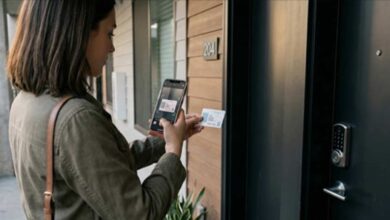
Smart-home products already make everyday tasks easier through voice-controlled lighting, thermostats, door locks, appliances and entertainment systems. For someone with reduced mobility or impaired vision, the ability to operate household devices by voice can make a meaningful difference. Motion-activated lights, automated medication reminders and sensors that detect water leaks or an open door can also reduce everyday risks.
More specialized systems are extending these capabilities into health and safety monitoring. Motion sensors and door sensors can monitor movement in the home. Some platforms learn typical daily routines and flag unusual changes, such as an extended period without movement or a missed morning activity.
These systems can provide useful information without recording video or requiring continuous human observation. A quiet morning does not necessarily indicate a medical emergency, and unusual activity may have an entirely innocent explanation – learning the user is an integral part of accuracy.
Staying in touch with a user’s community of support is also crucial. As JJensen Wong, founder of Medical Alert Buyers Guide, notes: “Increasingly, we review new medical alerts on their connection with caregivers through private portals and the like.” Part of the learning from AI will be to choose the best contact to reach out to first, when a situation arises.
Beyond Institutions
Hospitals, assisted-living communities and nursing facilities have long used technology to monitor patients, manage medication and reduce risks. What is changing is the extent to which related capabilities can now be deployed in ordinary homes.
Radar-based sensing, instead of a camera or a wearable device, can detect movement and even, in some applications, subtle movements associated with breathing. These systems may help identify a fall or other changes that warrant attention. Operating without capturing conventional video makes them attractive for privacy-sensitive monitoring.
Other technologies include pressure-sensitive bed and chair sensors, and connected medication dispensers. Some remote patient monitoring equipment can transmit measurements such as blood pressure, blood glucose or oxygen saturation to healthcare professionals when clinically appropriate. These tools can support care delivered at a distance and may help clinicians identify a developing problem before it becomes more serious.
The shift takes more than transferring hospital equipment into a house. Consumer systems must be easier to install, less intrusive and affordable enough for individual households. They must also work with ordinary internet connections, and ideally integrate with healthcare services.
What’s Next
Artificial intelligence is beginning to give all these technologies a more sophisticated role, developing from passive reporter to active analyst, learning to sift the false alarm from the real emergency.
AI can also make voice assistants more useful by improving speech recognition and allowing more natural interactions, potentially helping people who find conventional screens and menus difficult to navigate. This burgeoning technology is best understood as an additional layer of assistance rather than a substitute for professional judgment or human contact. Its potential lies in supercharging existing technologies, rather than replacing them.
The next stage of aging technology probably involves fewer devices that people have to remember to wear and more systems that operate quietly in the background. Many of the necessary components already exist: contactless sensors, voice interfaces, connected appliances, remote health monitoring and software capable of analyzing patterns of activity.
AI can excel in bringing them together is into dependable systems rather than as disconnected products. As technologies mature, independent living may increasingly depend not on any single breakthrough product, but on a well-designed combination of personal devices, smart-home systems and unobtrusive monitoring that adapts to changing needs over time.
Robotic assistants are being tested for tasks ranging from carrying objects and providing reminders to supporting mobility and rehabilitation. As Alan Wu notes, this technology is developing fast: “More capable household robots could eventually take on selected routine tasks, although learning to navigate the unique obstacles of any home is, again, key to reliability.” Self-driving vehicles may also expand mobility for people who can no longer drive safely, as this technology becomes established in society.