Escape the Toxic Procrastination Cycle Today: Proven Strategies That Instantly Boost Focus
Proven strategies and daily habits to break the procrastination cycle and regain confidence, motivation, and productivity.

Have you ever felt stuck, even when you really want to win? A silent productivity killer is undermining your goals, and most people are unaware of it. It is called the procrastination cycle. At first, it looks small. You delay one task. Then you tell yourself, “I will do it later.” But later never comes. Soon, this tiny delay turns into a habit. That habit becomes a pattern. And just like that, you are trapped in a loop.
So, what is the cycle of procrastination? It is a simple loop. First, you feel a task is hard or boring. Next, you avoid it. This is called task avoidance behavior. Then you feel a little relief. However, that relief does not last. Soon, guilt shows up. Guilt turns into stress. Stress makes your mental blocks even bigger. And because you feel stressed, you delay again. Guilt → stress → more delay. The cycle keeps spinning.
Over time, this toxic pattern hurts your success, your confidence, and your focus. Your time management skills get weaker. Your motivation and focus fade. You stop believing in yourself. Even small goals start to feel scary. As a result, productivity improvement becomes harder and harder.
But here is the good news. You can break this pattern and build self-discipline techniques. You can learn focus improvement strategies. And yes, you can escape the procrastination cycle permanently. In this guide, you will discover proven strategies to break the procrastination cycle fast, reset your mindset, and finally take control of your goals. Let’s begin today.


What Is the Procrastination Cycle and Why Is It So Toxic?
The procrastination cycle is a loop that keeps you stuck. It happens when you delay a task again and again. At first, it feels small. You say, “I will do it later.” But later turns into tomorrow. Then tomorrow turns into next week. This is how the cycle begins.
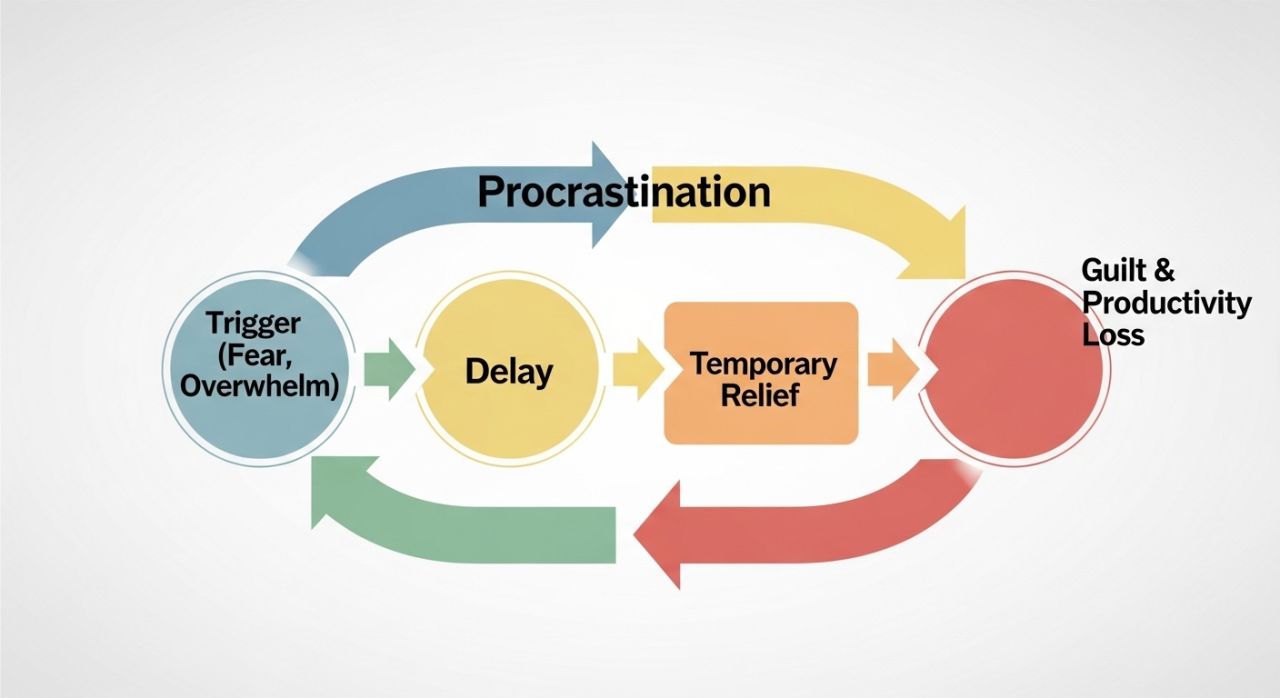
In simple words, the procrastination cycle is a pattern of delay → relief → guilt → more delay. You avoid a task. You feel calm for a short time. But soon, stress comes back. This stress creates mental blocks. Because of these mental blocks, you practice task avoidance behavior. And that makes it harder to stop delaying tasks.
So, how do procrastination habits form? They grow from small choices. When you avoid one hard task, your brain feels safe. It likes comfort. It likes easy things. Over time, your brain learns this pattern. This is called habit formation psychology. The more you repeat it, the stronger the habit becomes. As a result, productivity improvement feels difficult. Your time management skills get weaker. Your confidence also drops.
Now, let’s talk about why this cycle repeats itself. The answer is simple. Relief feels good. When you delay a task, pressure goes away for a moment. But that relief is temporary. Soon, deadlines come closer. Then guilt appears. Guilt turns into stress. Stress increases overwhelm. And because you feel overwhelmed, you delay again. This loop keeps spinning unless you break it with self-discipline techniques and focus improvement strategies.
The 4 Stages of the Procrastination Pattern
Let’s break it down clearly:
1. Trigger (Fear, Overwhelm, Boredom)
You see a task. It looks hard or boring. You feel fear or confusion. This is the starting point.
2. Delay (It Becomes Harder to Stop Delaying Tasks)
Instead of acting, you wait. You scroll. You distract yourself. This is task avoidance behavior in action.
3. Temporary Relief
You feel better for a short time. The pressure seems gone. But it is only hiding.
4. Guilt and Productivity Loss
Soon, guilt returns. You feel stressed. Your motivation and focus drop. Productivity suffers.
This is why the procrastination cycle is toxic. It steals your energy. It blocks your success. But once you understand the pattern, you gain power. And when you gain power, you can finally overcome procrastination and take control of your goals.
Psychological Reasons Behind the Procrastination Cycle
The procrastination cycle does not start because you are lazy. It starts in your mind. Your brain tries to protect you. It wants you to feel safe. However, sometimes it protects you in the wrong way. As a result, you delay tasks and feel stuck.
One big reason is fear of failure. You worry that you might make mistakes. So, instead of trying, you wait. This fear grows when you chase perfectionism. You tell yourself, “It must be perfect.” But perfect feels scary. Therefore, you stop before you even begin. This creates strong procrastination habits.
Another reason is cognitive overload. This means your brain feels too full. You think about too many things at once. Your time management skills feel weak. You do not know where to start. So, you choose the easiest option — delay. This task avoidance behavior feels simple at first. But later, it causes stress.
Also, many people lack clear goal-setting strategies. When goals are fuzzy, action feels hard. If you do not know the next small step, your mind freezes. Mental blocks grow bigger. Because of this, productivity improvement slows down. You lose direction. Then you lose motivation and focus.
Self-doubt also plays a big role. You may think, “I am not good enough.” That thought lowers your confidence. Low confidence lowers action. And low action feeds the procrastination cycle again. It becomes a loop of delay and disappointment.
Why the Procrastination Cycle Is Hard to Stop
You may ask, “If I know this, why can’t I just stop?” The answer is simple.
First, your brain’s reward system loves comfort. When you avoid a hard task, your brain gives you quick relief. That relief feels good. So, your brain says, “Let’s do that again.” This is how habit formation psychology works. Small delays turn into strong patterns.
Second, emotional avoidance patterns make things worse. You do not avoid the task. You avoid the feeling, avoid fear, stress, or boredom. However, feelings do not disappear. They wait. And when they return, they feel stronger.
That is why the procrastination cycle feels powerful. But remember this: patterns can change. When you understand the psychology, you gain control. And when you use self-discipline techniques and focus improvement strategies, you slowly overcome procrastination and build a stronger, braver mindset.
How the Procrastination Cycle Destroys Productivity and Focus
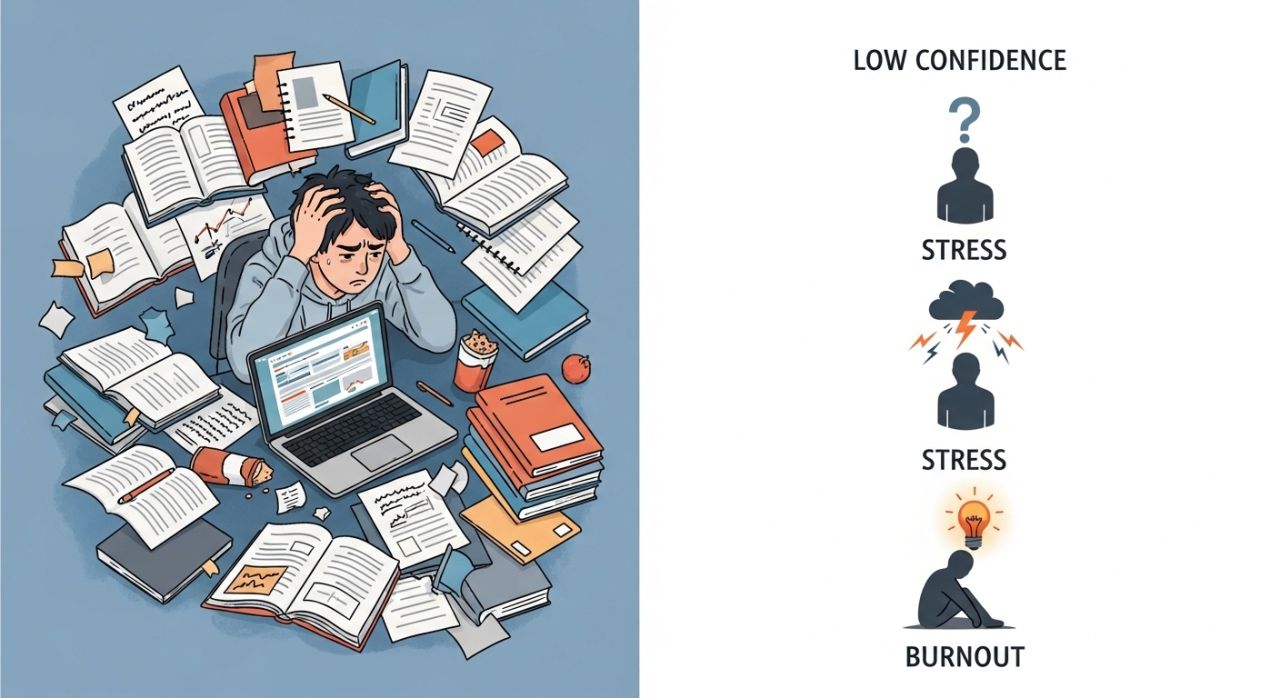
The procrastination cycle may look small, but it causes big damage. At first, you delay one task. Then you delay another. Soon, your plans fall apart. As a result, productivity improvement becomes very hard. You want to grow. You want success. However, delay keeps stealing your time.
When you keep putting things off, your confidence drops. You stop trusting yourself. You say, “I will do it later,” but later never comes. Because of this, your momentum slows down. And without momentum, even simple goals feel heavy. This is how procrastination habits quietly weaken your time management skills.
Next comes stress. Unfinished tasks pile up. Deadlines get closer. Your mind feels full. These mental blocks grow stronger each day. Over time, this pressure can lead to burnout. You feel tired. You lose motivation and focus. Even fun work feels boring. That is the hidden cost of the procrastination cycle.
This problem affects everyone. The procrastination cycle in students and professionals looks similar. Students delay homework. Professionals delay important projects. Both feel guilt. Both feel stress. And both struggle with task avoidance behavior.
However, here is the truth: delay steals your power, but action gives it back. When you break the cycle, you rebuild confidence. You restore focus. And step by step, you overcome procrastination and move toward real success.
Proven Strategies to Break the Procrastination Cycle Fast
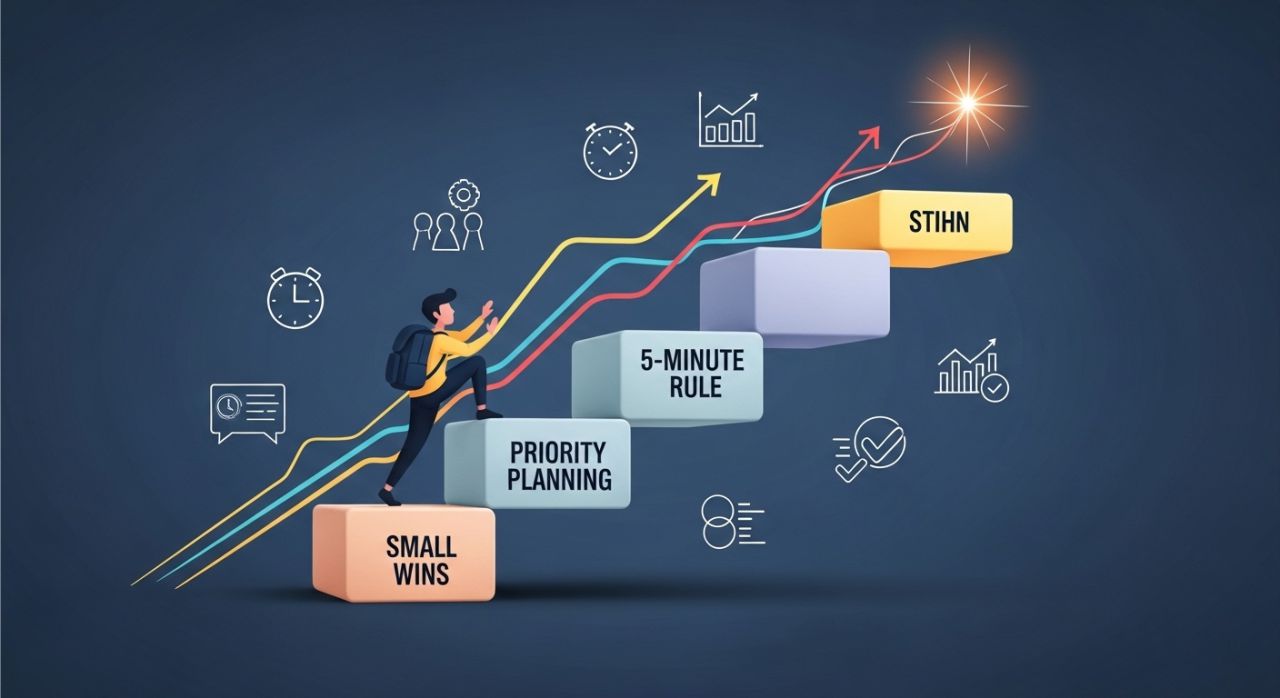
The good news is simple. You can break the procrastination cycle. You do not need magic, just need action. Small action. Smart action. And steady action.
First, focus on action-focused solutions. Do not wait to “feel ready.” Start before you feel ready. Action creates energy. Energy builds motivation and focus. When you move, even a little, your mental blocks become smaller. This is how you begin to overcome procrastination.
Next, try the small wins method. Big tasks feel scary. So, break them into tiny steps. For example, instead of writing a full report, write one paragraph. Instead of cleaning the whole room, clean one desk. Each small win boosts confidence. It improves your productivity mindset shift. And it makes productivity improvement easier and faster.
Another powerful tool is the 5-minute rule. Tell yourself, “I will work for just five minutes.” That’s it. Five minutes feels easy. Your brain does not panic. Most of the time, once you start, you keep going. Starting is the hardest part of procrastination habits. So, make starting simple.
Now let’s talk about priority-based planning. Not all tasks are equal. Some tasks matter more. Use simple goal-setting strategies. Ask, “What is the most important task today?” Do that first. This improves your time management skills. It also reduces task avoidance behavior because you have a clear direction.
Cognitive Behavioral Techniques to Overcome Procrastination
Your thoughts control your actions. So, change your thoughts.
Start by reframing negative thoughts. If you think, “This is too hard,” replace it with, “I can do one small part.” If you think, “I always fail,” say, “I am learning.” These small changes weaken the procrastination cycle.
Next, replace avoidance with micro-action. Do not scroll. Do not delay. Instead, take one tiny step. Open the document. Write one sentence. Send one email. Micro-actions break emotional avoidance patterns. They build momentum.
Finally, focus on building self-discipline techniques. Discipline is like a muscle. The more you use it, the stronger it grows. Set a simple routine. Work at the same time each day. Remove distractions. Celebrate progress. Over time, habit formation psychology works in your favor.
Remember this: You do not need a huge effort. You need a consistent small effort. When you apply these proven strategies to break the procrastination cycle, you build focus improvement strategies that last. Step by step, you take back control. And once you start, success becomes easier than delay.
Daily Habits to Escape the Procrastination Cycle Permanently
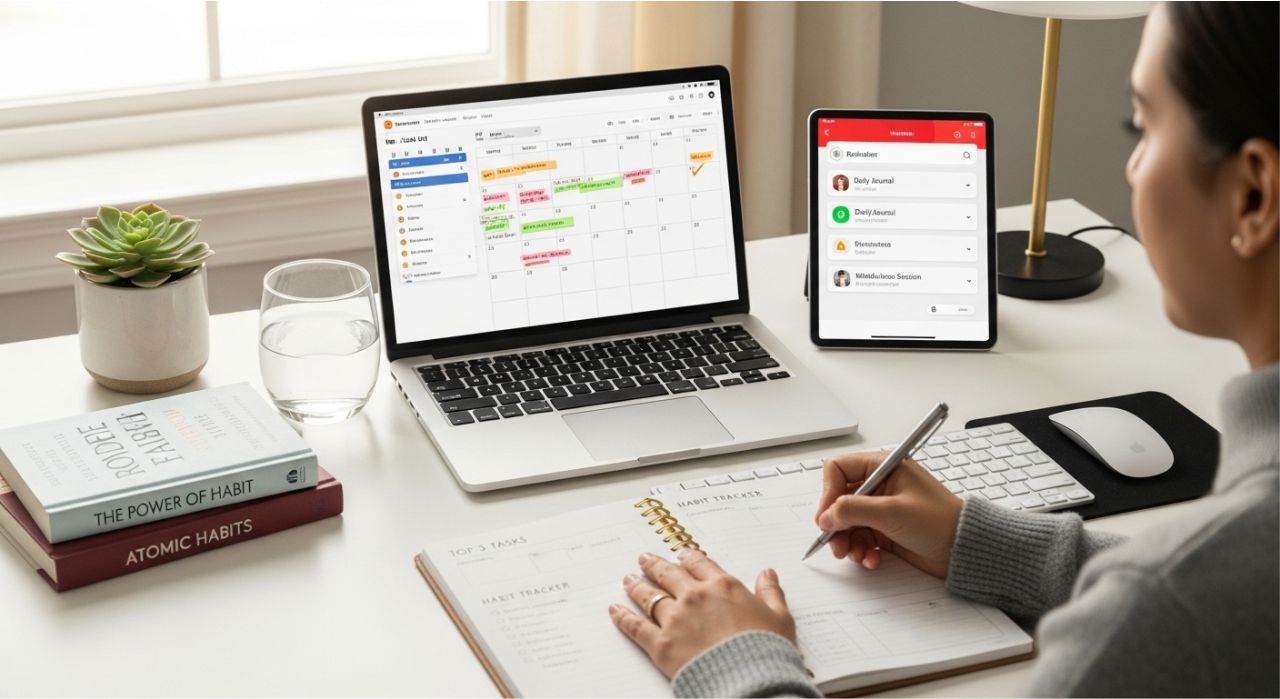
Breaking the procrastination cycle is not about one big change. It is about small, daily habits. These habits help you build focus improvement strategies and stay productive every day.
Start your day with morning focus improvement strategies. Begin with one clear task. Avoid checking your phone first. Instead, write your top goal for the day. This sets your mind in action. It reduces task avoidance behavior and strengthens your productivity mindset shift.
Next, use habit stacking for consistency. Link a new habit to something you already do. For example, after brushing your teeth, plan your top three tasks. After making coffee, spend five minutes on a micro-action. Stacking habits makes routines easy to follow and builds self-discipline techniques.
Also, pay attention to environmental design. Make your workspace simple and organized. Remove distractions like phone notifications or messy desks. A clean environment signals your brain: “It is time to focus.” This helps you maintain motivation and prevents mental blocks from growing.
Finally, take practical steps to overcome procrastination fast. Break big tasks into small pieces. Use the 5-minute rule. Celebrate small wins. Each step weakens the procrastination cycle and builds momentum.
Remember, the key is consistency. Daily habits create long-term change. By starting small and repeating simple actions, you can escape the procrastination cycle permanently. Step by step, you regain focus, confidence, and control over your day.
Tools to Overcome the Procrastination Cycle and Boost Focus
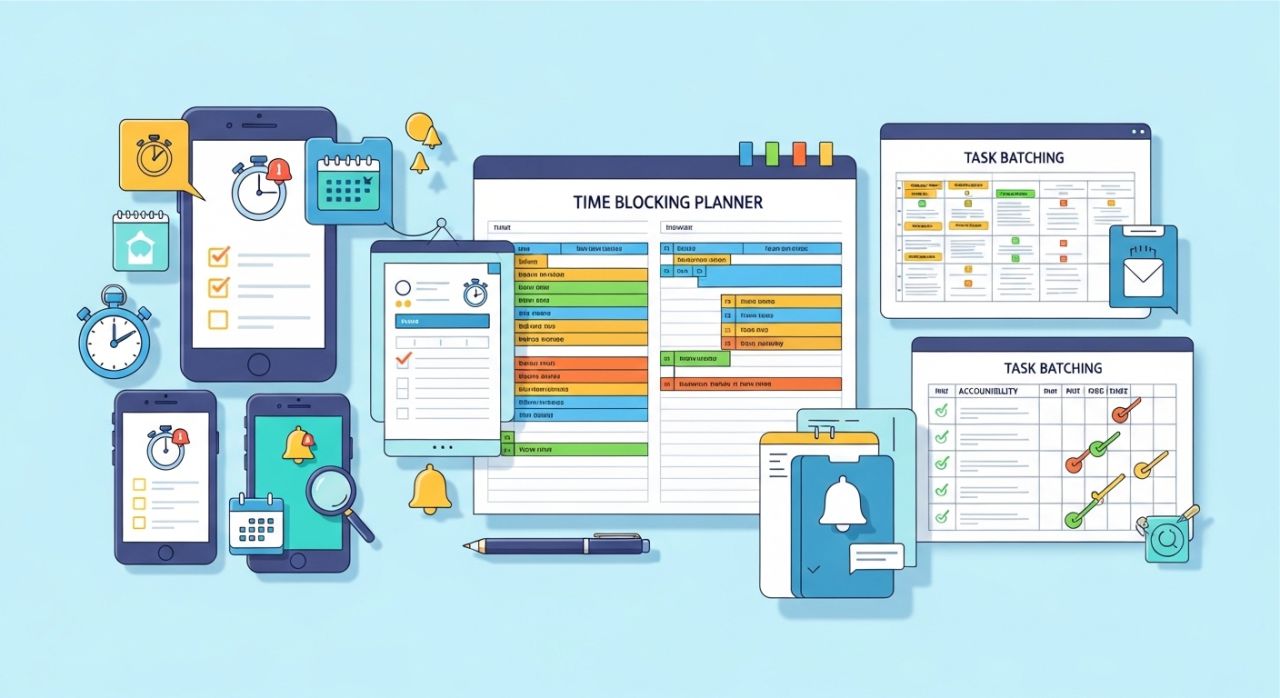
The procrastination cycle can feel overwhelming, but the right tools make it easier to break. These tools help you build focus improvement strategies and stay on track every day.
First, try time-blocking systems. Set specific times for each task. For example, 9–10 AM for emails, 10–11 AM for a project. When your day is scheduled, your brain knows what to do next. This reduces task avoidance behavior and improves time management skills.
Next, use task batching. Group similar tasks together. For example, reply to all messages at once, then work on all reports together. Batching reduces distractions and makes productivity improvement faster.
Another powerful method is accountability systems. Tell a friend, colleague, or mentor your goal. Share your progress daily or weekly. Knowing someone is watching keeps you motivated. It also strengthens self-discipline techniques.
Finally, use digital tools for focus improvement. Apps like timers, project management software, or habit trackers help you stay organized. They remind you to act, prevent procrastination habits, and track small wins.
Remember, tools alone do not solve the problem. Using them consistently builds momentum. When combined with daily habits and proven strategies, these tools make breaking the procrastination cycle much easier.
Step by step, you can regain control, improve focus, and finish tasks without stress. By choosing the right tools and sticking with them, you make procrastination a thing of the past.
How to Reset Your Productivity Mindset and Stay Consistent

Breaking the procrastination cycle is not only about tasks. It is about your mind. To succeed, you need to reset your productivity mindset and stay consistent every day.
Start with identity-based growth. Think of yourself as a doer, not a delayer. Say, “I am someone who finishes tasks on time.” When your identity changes, your habits follow. This strengthens self-discipline techniques and reduces task avoidance behavior.
Next, focus on motivation and focus alignment. Ask yourself, “Why is this task important?” When your goals match your motivation, action feels easier. Your brain stops resisting, and productivity improvement becomes natural.
For lasting change, aim for a long-term productivity mindset shift. Avoid quick fixes. Instead, build routines that stick. Use daily habits, time-blocking, and small wins. Over time, these habits make consistent focus second nature.
Finally, learn how to boost focus and stop procrastinating sustainably. Remove distractions from your environment. Break big tasks into small steps. Celebrate micro-wins. Use digital tools or accountability systems to track progress. Each small success reinforces your new mindset.
Remember, consistency is key. Small daily actions create big long-term results. When you reset your productivity mindset, you do more than finish tasks. You gain confidence, focus, and control. Step by step, you escape the procrastination cycle for good.
Break the Procrastination Cycle and Take Back Control Today
Now you know the truth about the procrastination cycle. It starts when a task feels hard, scary, or boring. Then you delay it. You feel a little relief. But soon, guilt shows up. After that, stress grows. Your mental blocks get bigger. Your task avoidance behavior becomes stronger. And just like that, the cycle repeats. This is why so many people struggle with time management skills and productivity improvement. It is not laziness. It is a pattern.
However, here is the powerful truth: awareness + small action = momentum. When you notice the pattern, you can change it. When you take one tiny step, you weaken the procrastination habits. For example, try the 5-minute rule. Or use simple goal-setting strategies. These small moves build self-discipline techniques. They also boost motivation and focus. Step by step, you create a productivity mindset shift.
Most importantly, believe this: You can break the procrastination pattern. You are not stuck. You are learning. And every small win helps you overcome procrastination faster. So do not wait for the “perfect” time. Instead, apply one proven strategy today. Start small. Start now.
Now I want to hear from you. Which stage of the procrastination cycle traps you most? Is it fear? Delay? Or guilt? Share your thoughts in the comments. Your story may help someone else.
Also, share this guide with a friend who feels stuck in the procrastination cycle. And do not forget to bookmark this page for daily focus improvement strategies and long-term productivity improvement. Your action today builds your success tomorrow.