Invisible Power: How Smart Backend Systems and Seamless UX Together Define the Future of E-Commerce Technology
By Ahmed Abuswa — Modonix Insights

Introduction
In modern e-commerce, the real innovation is increasingly happening where customers never look — in the backend.
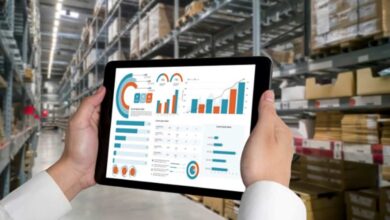
Behind every ‘one-click checkout’ and frictionless product experience lies an invisible infrastructure of data orchestration, inventory logic, and workflow automation that determines whether a business scales or stalls.
While most brands still chase new website designs or flashy marketing funnels, the most competitive companies are investing in backend intelligence — connecting ERP, CRM, logistics, and customer data into a single operational ecosystem that quietly powers the front-end experience.
The next evolution of e-commerce technology isn’t about what users see. It’s about what they feel — and that feeling is built on the reliability and intelligence of invisible systems.


The Core Shift: From Visual Design to System Intelligence
The last decade of e-commerce revolved around UX/UI — conversion-optimized pages, responsive design, and checkout speed. These things still matter. But design alone can’t deliver consistency, trust, or profitability.
According to McKinsey & Company, digital leaders outperform peers by up to 25% in revenue growth and 31% in operational efficiency — largely because they build technology stacks that integrate data and decisions across marketing, operations, and fulfillment.
In 2026 and beyond, user experience (UX) will no longer be defined by pixels but by precision — how seamlessly systems predict, communicate, and adapt behind the interface.
“The future of UX is operational — it’s not what users click, but what systems understand before they do.”
The Operational Chain: Linking Data, Delivery, and Delight
What customers perceive as simplicity — ‘fast shipping,’ ‘instant refund,’ ‘personalized suggestions’ — is the outcome of hundreds of invisible backend actions happening in milliseconds.
This is the Operational Chain Modonix defines: a synchronized loop between frontend UX and backend logic that ensures every touchpoint reflects a system-level decision.
Example Chain:
1. Customer views a product — The system predicts regional stock and adjusts delivery ETA.
2. Adds to cart — ERP allocates inventory and syncs pricing rules.
3. Payment completes — Workflow routes the order to the closest 3PL.
4. Post-purchase — CRM feeds data back into retention flows.
“Every seamless moment your customer experiences is the outcome of an invisible decision your system already made.”
Data Clarity: How MER Translates Backend Strength Into Frontend ROI
Every technology investment should ultimately be measured by impact — not aesthetics. This is where the Marketing Efficiency Ratio (MER), available through the Modonix MER Tool, becomes a strategic bridge between backend efficiency and frontend performance.
MER = Total Revenue ÷ Total Marketing Spend. But the key is to include operational efficiencies in this measurement — not just ads.
Automation that reduces refund handling time, stockout frequency, or data latency directly improves ROI by enabling faster, cheaper customer retention.
Example:
Before ERP integration: MER = 3.0
After backend automation + UX optimization: MER = 4.4
“When operations become marketing, efficiency becomes your brand.”
Practical Use Cases for Modern E-Commerce Operators
- Integrate your backend first, brand second — Build your website around ERP and inventory logic, not the other way around.
- Automate repetitive workflows — Use backend triggers for shipping updates, price changes, and SKU syncs to avoid manual lag.
- Unify customer data — Merge CRM, order history, and behavior analytics into one layer — create a ‘single source of truth.’
- Predict logistics and supply in real time — Integrate API-based fulfillment tools that automatically reroute shipments or adjust inventory availability.
- Measure MER holistically — Include backend system gains in marketing performance analysis to quantify operational ROI.
The Human Layer: Leadership Behind the Logic
Technology doesn’t eliminate leadership; it demands it. A fully automated backend still needs vision — human oversight that ensures efficiency doesn’t erase empathy.
The strongest e-commerce leaders balance operational discipline with customer intuition. They know how to interpret data without losing touch with the people behind it.
“Automation executes decisions. Leadership ensures they’re the right ones.”
How Brands Can Prepare Now
- Map your system dependencies — Identify where data breaks between marketing, inventory, fulfillment, and customer service.
- Adopt modular architecture — Choose tech stacks that scale and integrate — composable commerce, API-first, ERP-connected.
- Invest in cross-functional clarity — Train marketing teams on data interpretation, and tech teams on customer experience outcomes.
- Measure operational impact — Use tools like MER and inventory turnover ratios to quantify how backend efficiency drives growth.
- Create transparency dashboards — Let your team and customers ‘see the work’ — delivery times, sustainability data, uptime reports.
- Keep UX human — Make sure automation supports clarity, not complexity.
Conclusion — The Future Is Invisible but Measurable
E-commerce success has always been about trust — but trust today is built differently. It’s not about storytelling or design aesthetics alone. It’s about showing customers that every system behind the screen works in harmony to deliver value, accuracy, and care.
The future of e-commerce technology is invisible power: backend precision fused with human-centered UX. The brands that master both will define the standard for performance, loyalty, and long-term scalability.
Explore the Modonix MER Tool to measure how backend intelligence amplifies your marketing efficiency — and start building systems your customers can trust, even if they never see them.
Resources (Verified, Live Links)
McKinsey & Company — A New Operating Model for a New World
Ali, S.M.S. — Consumer Trust in Digital Brands: The Role of Transparency and Ethical Marketing