How to Crush Paralysis Analysis Fast and Unlock Powerful Decision-Making Skills
Stop overthinking, boost confidence, and make fast, effective decisions today.


Have you ever stood in front of two choices and felt stuck? You think. Then you think more. Soon, the moment is gone. That missed chance hurts. This is called paralysis analysis. It happens when you overthink so much that you stop taking action.
In simple words, your brain keeps studying every tiny detail, but your feet refuse to move. This overthinking problem may feel safe at first. However, it slowly steals your time and energy. As a result, your decision-making skills grow weak. You feel the fear of making wrong decisions. You doubt yourself. Then the procrastination cycle begins.
Because of paralysis analysis, your productivity drops. You delay tasks, miss business chances, and lose growth in school, work, and life. Even worse, your dreams wait while you search for “perfect” answers.
This is the dangerous battle of analysis vs action. When you stay stuck, you fall into the perfectionism trap. Your mind feels heavy from cognitive overload. You want clarity in decision-making, but instead, you feel confused.


But here is the good news. You can break free. In this guide, you will not only learn fast decision-making techniques but also discover simple, practical steps to stop overanalyzing decisions. Moreover, you will build a strong productivity mindset that keeps you focused and motivated.
In addition, you will explore confidence-building strategies that empower you to act without fear. Step by step, and with consistent practice, you will unlock powerful growth and start making decisions with clarity and purpose.
Now, let’s explore what truly causes paralysis analysis—and how you can crush it for good.
What Is Paralysis Analysis? (And Why Smart People Struggle With It)

Have you ever stared at a choice for so long that you did nothing? That is called paralysis analysis. It happens when your brain keeps thinking about every tiny detail, but your body refuses to move. In simple words, you get stuck between thinking and acting. While it feels safe, it secretly blocks your growth and productivity.
It’s easy to confuse paralysis analysis with overthinking. Overthinking happens when you dwell on mistakes or possibilities. Paralysis analysis goes further. It stops you from taking action at all. You may know what to do, but fear, doubt, or the search for perfect clarity keeps you frozen.
This often leads to cognitive overload. Your brain handles too much information at once. You start seeing mental blocks everywhere. You feel tired, stressed, and unable to decide. Even high achievers fall into this trap. They want every decision to be perfect. They fear failure. This is the classic perfectionism trap. The more they aim for perfection, the less they act, and the more opportunities pass them by.
The Real Cost of Analysis vs Action
When you stay stuck in analysis vs action, the costs pile up. First, you miss opportunities. That chance to impress your boss, grow your business, or learn something new slips away. Next, your growth slows. Each day spent overthinking is a day you don’t move forward. Finally, your confidence in decision-making drops. You begin to doubt yourself, even on small choices.
Paralysis analysis may feel safe, but it quietly drains your energy, time, and potential. Recognizing it is the first step toward freedom. Once you understand how it differs from overthinking and why cognitive overload and perfectionism hold you back, you can start taking action. Step by step, you can break the cycle, regain clarity, and unlock strong, confident decision-making skills.
By acting instead of endlessly thinking, you reclaim control, boost productivity, and turn mental blocks into learning opportunities.
What Causes Paralysis Analysis in Adults?
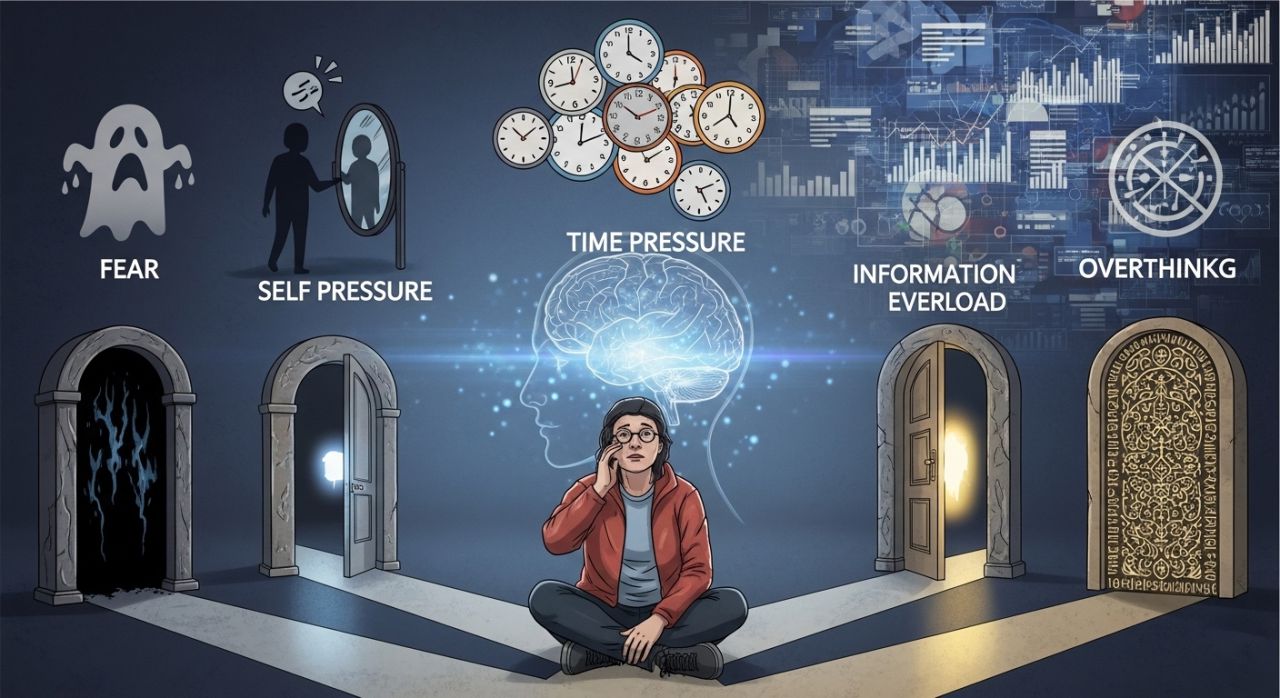
Have you ever stared at a choice and felt stuck? That’s paralysis analysis at work. Adults face it too, and the reasons are simple but powerful.
First, there is the fear of making wrong decisions. People worry about mistakes. They imagine the worst outcome. This fear slows action and creates mental blocks. Even small choices can feel huge.
Next, self-doubt in decision-making makes things worse. Thoughts like, “Am I good enough?” or “Will I fail?” keep repeating. This doubt makes your brain overthink every detail. It steals your confidence and keeps you frozen.
Another cause is information overload and cognitive overwhelm. We live in a world full of facts, advice, and opinions. Our brains try to handle it all at once. The result? Confusion, stress, and the classic overthinking problem. You may know what to do, but your brain feels tired and blocked.
Finally, there are deep psychological reasons behind paralysis analysis. Your brain wants safety. It thinks thinking more equals less risk. But overthinking creates the opposite. It builds stress, slows action, and traps you in the procrastination cycle.
Understanding these causes is the first step to freedom. When you see why paralysis analysis happens, you can use smart strategies to break free. You can build a strong productivity mindset, boost decision-making skills, and act confidently.
Even adults can stop overthinking and take action. Step by step, you can turn fear, doubt, and overload into clarity and confident decisions.
The Warning Signs You’re Stuck in an Overthinking Problem
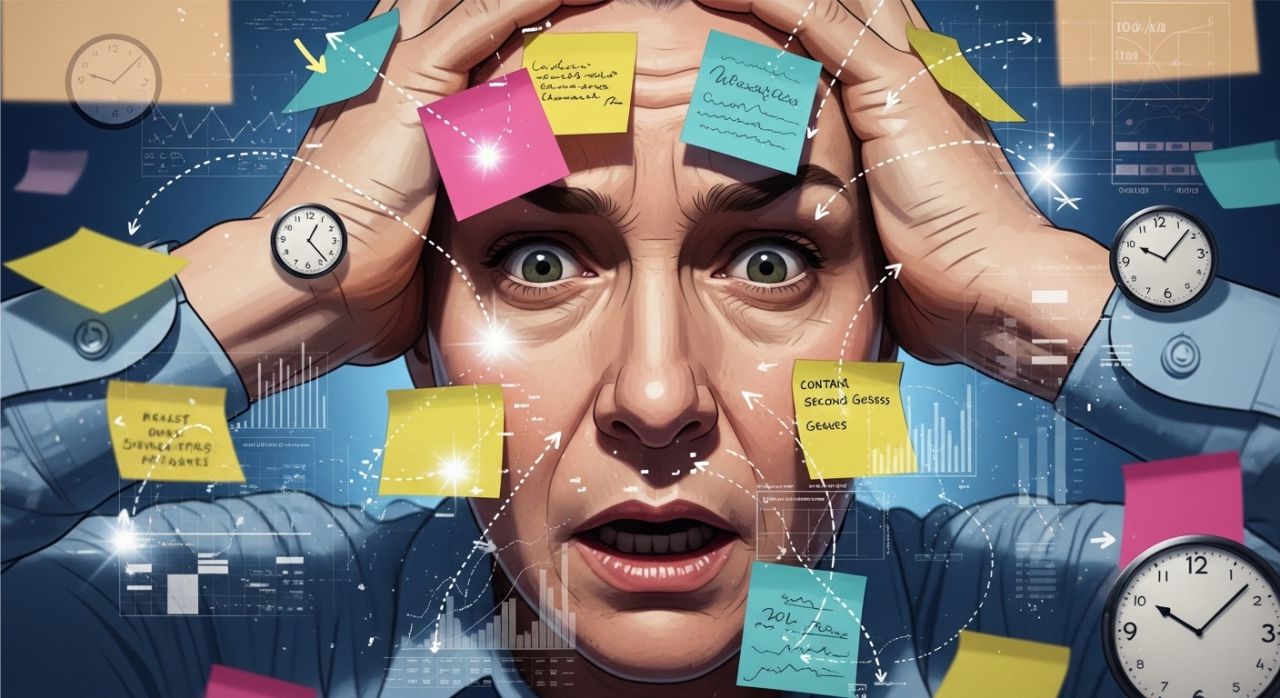
Sometimes, paralysis analysis does not shout. It whispers. It hides behind “careful thinking.” However, if you look closely, you can see the signs. When you notice them early, you can protect your decision-making skills and build a strong productivity mindset.
First, do you keep second-guessing yourself? You make a choice. Then you question it. After that, you change it again. This constant second-guessing is a big red flag. It shows self-doubt in decision-making. Instead of moving forward, you move in circles.
Next, do you spend hours searching for more facts but never act? This is called excessive research without action. You read more blogs, watch more videos, and compare more options. Yet you still do nothing. This is the classic battle of analysis vs action. And analysis keeps winning.
Another warning sign is decision fatigue. Your brain feels tired. Even small choices feel heavy. You struggle because of cognitive overload. Too much thinking drains your energy. As a result, simple tasks feel hard.
Finally, you may struggle with clarity in decision-making. You want the perfect answer. But the more you think, the less clear you feel. This is how paralysis analysis traps you.
If you see these signs, do not panic. Awareness is the first step. Once you notice the pattern, you can break the overthinking problem and take action with confidence.
How to Overcome Paralysis Analysis Quickly (Actionable Framework)

Now comes the good part. You can beat paralysis analysis. You do not need to think forever. Instead, you need a simple action. When you use the right system, your decision-making skills grow fast. You break the overthinking problem step by step.
First, use practical steps to stop overanalyzing decisions. Start small. Ask, “What is the worst that can happen?” Most fears are bigger in your head than in real life. This reduces the fear of making wrong decisions. Next, remind yourself that progress matters more than perfection. This helps you escape the perfectionism trap.
Then, try the 5-minute rule. Give yourself five minutes to think. No more. When the timer ends, make a choice. This is one of the best fast decision-making techniques. It stops cognitive overload. It pushes you toward analysis vs action. And action wins.
Also, set clear decision deadlines. Tell yourself, “I will decide by 3 PM.” Deadlines protect your time. They protect your productivity mindset. Without a deadline, your brain keeps searching for more answers.
Another powerful tool is the 80/20 rule. It means 80% of results come from 20% of effort. So stop chasing perfect clarity in decision-making. Focus on what truly matters. Let go of tiny details. This builds confidence and critical thinking improvement.
A Simple 3-Step “Decide & Move” Method
Here is an easy method you can use today:
1. Define the real problem.
Ask, “What am I truly deciding?” Keep it simple.
2. Limit your options.
Choose only two or three choices. Too many options cause mental blocks and overwhelm.
3. Take imperfect action.
Move forward even if it feels scary. Action creates clarity. Waiting creates doubt.
Remember, clarity does not come before action. It comes after. When you act, you build confidence. When you delay, you build fear. So choose action today—and crush paralysis analysis for good.
How to Make Confident Decisions Without Fear

Making choices can feel scary. That’s where paralysis analysis hides. But you can beat it with the right mindset. When you learn confidence-building strategies, making decisions becomes easier and faster. Small steps build big courage.
First, shift your mindset for success. Stop thinking that every choice must be perfect. Instead, think, “I will learn as I go.” This simple mindset shift for success turns fear into action. It helps you escape the perfectionism trap and reduces the overthinking problem.
Next, start reframing mistakes as feedback. If a choice doesn’t work, it’s not failure—it’s learning. This approach strengthens your decision-making skills. You stop doubting yourself. You gain clarity in decision-making. Each mistake becomes a stepping stone toward growth.
Also, focus on critical thinking improvement, not endless rumination. Analyze options with logic, then act. Thinking endlessly creates mental blocks and decision fatigue. Action gives real clarity. When you combine critical thinking with action, you move forward confidently.
Finally, practice small daily decisions. Even choosing what to eat or what task to do first trains your brain. Over time, your fear fades. You build a strong productivity mindset. You break free from the procrastination cycle.
Remember, clarity comes after action, not before it. When you take steps, even small ones, you strengthen your confidence, improve your critical thinking, and crush paralysis analysis once and for all.
Strategies to Break Decision Paralysis at Work and in Business Leadership

Even at work, paralysis analysis can sneak in. Leaders often overthink. They fear mistakes. They want every decision to be perfect. But this slows teams down. It blocks growth. It creates stress.
Fast decision-making improves team productivity. When leaders act, teams act. Momentum builds. Deadlines are met. Projects move forward. This is why learning to act quickly is essential for business success.
You can use simple tools to prevent paralysis analysis in daily life. For example, decision checklists, time-boxing, or a short pros-and-cons list. Even a timer for five minutes can push you to act. These tools stop overthinking and reduce cognitive overload.
Also, focus on creating a productivity mindset in high-pressure environments. Start by breaking big tasks into small, clear steps. Reward yourself for action, not just planning. Remind your team that mistakes are feedback, not failures. This mindset shift for success builds confidence and clarity in decision-making.
Remember, leaders who act decisively create strong, motivated teams. They reduce the fear of making wrong decisions and the procrastination cycle. Over time, fast decision-making becomes a habit. You gain critical thinking improvement without endless rumination.
By practicing these strategies, you can crush paralysis analysis at work. You take control, improve team performance, and build a culture of confident action. Action drives clarity, not overthinking, and that is how real business growth happens.
Practical Tools to Improve Decision-Making Skills Fast
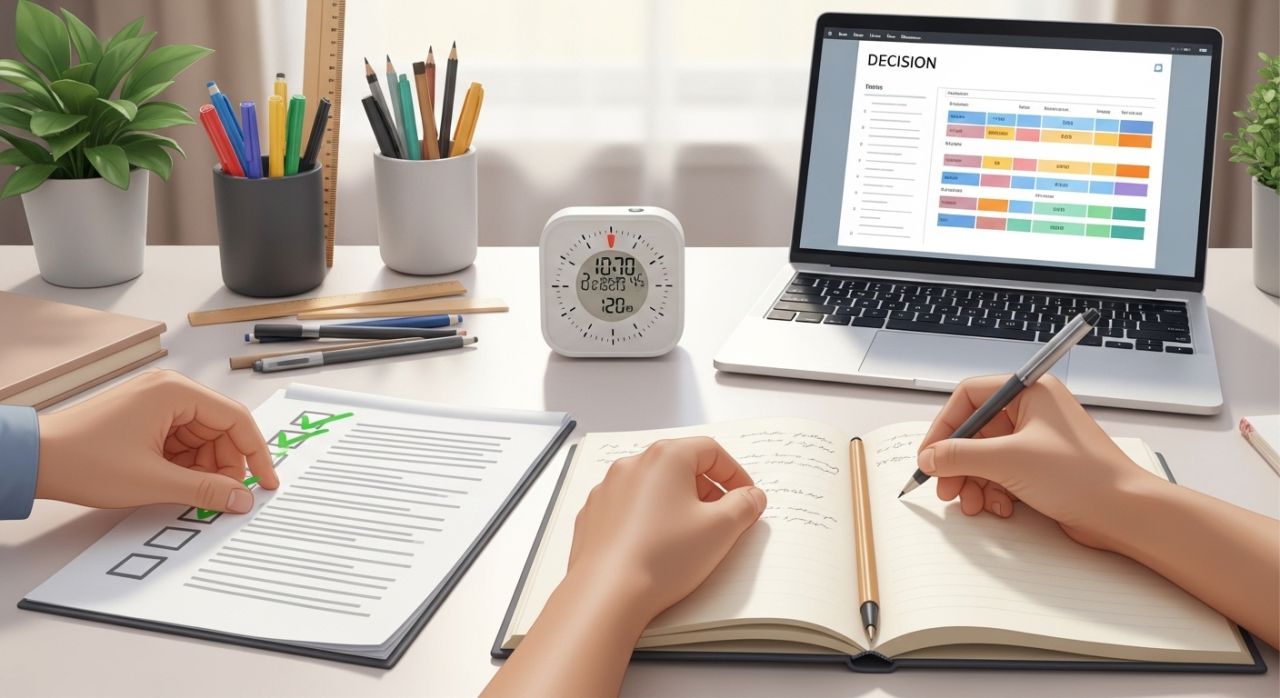
Beating paralysis analysis is easier when you use the right tools. They help your brain focus, act, and build strong decision-making skills.
First, try the decision matrix method. It’s simple. List your options. Score each one based on importance and impact. This shows which choice matters most. It stops endless second-guessing and reduces mental blocks.
Next, use the time-boxing technique. Give yourself a set amount of time to decide. For example, 15 minutes to choose a task or make a small business decision. When the timer ends, act. This fast decision-making technique cuts cognitive overload and keeps your productivity mindset strong.
Journaling for mental clarity is another powerful tool. Write down your choices, thoughts, and fears. Seeing them on paper clears the confusion. It turns self-doubt into structured thinking. You gain clarity in decision-making and confidence in action.
Finally, reduce cognitive overload with structured thinking systems. Break big decisions into small steps. Focus on one step at a time. Use checklists or flowcharts. This prevents analysis vs action traps and helps you stay on track.
When you combine these tools, you crush paralysis analysis quickly. You stop overthinking, act confidently, and improve critical thinking without endless rumination. Most importantly, your mind stays calm, clear, and ready for action.
Remember, clarity comes after action, not before it. Use these practical tools today, and watch your decision-making skills grow fast.
Paralysis Analysis vs Decisive Action: The Powerful Mindset Shift
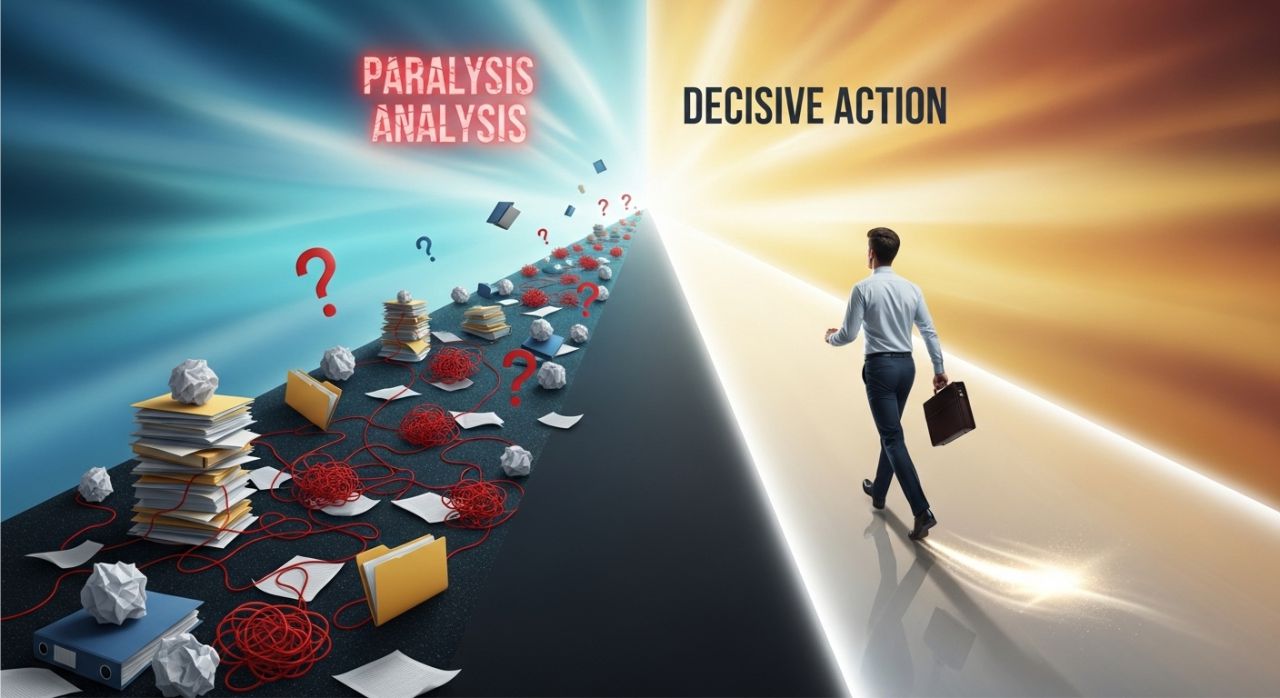
Many people get stuck in paralysis analysis because they want perfect answers. They spend hours thinking, planning, and worrying. This is the classic battle of analysis vs action. Analysis feels safe, but it keeps you frozen. Action feels risky, but it moves you forward.
Here’s the key: imperfect action builds momentum. Even a small step gives your brain feedback. You learn. You adjust. Each action creates confidence. Waiting for perfect clarity only increases fear and self-doubt in decision-making.
When you act, you start turning clarity into confidence. You see results, even tiny ones. You understand what works and what doesn’t. Your productivity mindset grows stronger. You reduce the overthinking problem and escape the procrastination cycle.
Over time, taking decisive action brings powerful long-term benefits. First, you strengthen your critical thinking and build trust in your own choices. Then, you learn to handle challenges more calmly and quickly.
As a result, your decision-making skills become sharper, and you achieve goals faster, whether in school, at work, or in business. Ultimately, consistent action turns small steps into big results, helping you grow with confidence and clarity.
Remember, clarity does not come from endless thinking. It comes from doing. When you shift your mindset from overthinking to decisive action, you crush paralysis analysis for good. Small, brave steps today lead to strong, confident decisions tomorrow.
So act now. Take one small step. Momentum will follow, and your confidence will grow with every decision you make.
Take Action Today and Crush Paralysis Analysis for Good
Now you see the truth. Paralysis analysis feels safe, but it is not. It looks smart, yet it blocks growth. When you overthink, you lose time. When you fear making wrong decisions, you stay stuck.
Slowly, your decision-making skills grow weak. You fall into the perfectionism trap. You face cognitive overload. Then the procrastination cycle begins again. This is why the overthinking problem is so dangerous. It steals chances in school, business, and life.
But here is the powerful mindset shift. Clarity comes from action, not endless thinking. You do not need perfect answers. You need brave steps. When you choose analysis vs action, action wins every time. Small moves build confidence.
Fast decision-making techniques create momentum. A strong productivity mindset grows when you act, learn, and adjust. That is how real success happens.
So now, do not wait. Do not overthink this moment. Pick one simple strategy from this guide. Maybe set a short deadline. Maybe limit your choices. Then move forward. Even a tiny step breaks mental blocks and builds clarity in decision-making.
Choose one decision you’ve been delaying and act on it within the next 24 hours. Yes, today. Not next week. Not “someday.”
Also, tell me in the comments: What decision feels hardest for you right now? Sharing helps you grow.
And if you want more confidence-building strategies and mindset tips, follow us on Instagram for daily productivity boosts. Your action starts now.