Why Ring Network Topology Is a Smart and Reliable Choice for Modern Networks
Discover how ring network topology boosts network reliability, efficiency, and performance for businesses, schools, and modern LAN setups.


Today, our world runs on fast internet. Schools, hospitals, banks, and even small shops need speed, network reliability, and strong network redundancy. Data must move quickly and safely. Because of this, people look for smart ways to build networks. One powerful option is ring network topology.
But wait — some people ask, “Is ring topology outdated?” That’s a fair question. Technology changes fast. However, many businesses and IT experts still trust this system.
Why? It uses a clever token-passing protocol that controls network data transmission in an organized way. As a result, data moves smoothly around the circle without crashing into other data.
In fact, when we compare different LAN topology types, ring systems still stand strong. They offer balanced performance and better control than some other designs. Also, modern upgrades like dual ring topology improve fault tolerance in networking. This means the network can keep working even if one path fails. That sounds pretty smart, right?


In this post, you will learn how ring network topology works in simple words. You will also discover its real benefits, honest drawbacks, and easy comparisons like star vs ring topology.
Plus, we will explore real-world examples and simple computer network design tips. So, if you want a network that is structured, reliable, and powerful, keep reading. You might be surprised at how useful ring topology still is today.
Read Also: The Future of Network Topology: Trends Shaping Digital Infrastructure
What Is Ring Network Topology? (Explained for Beginners)
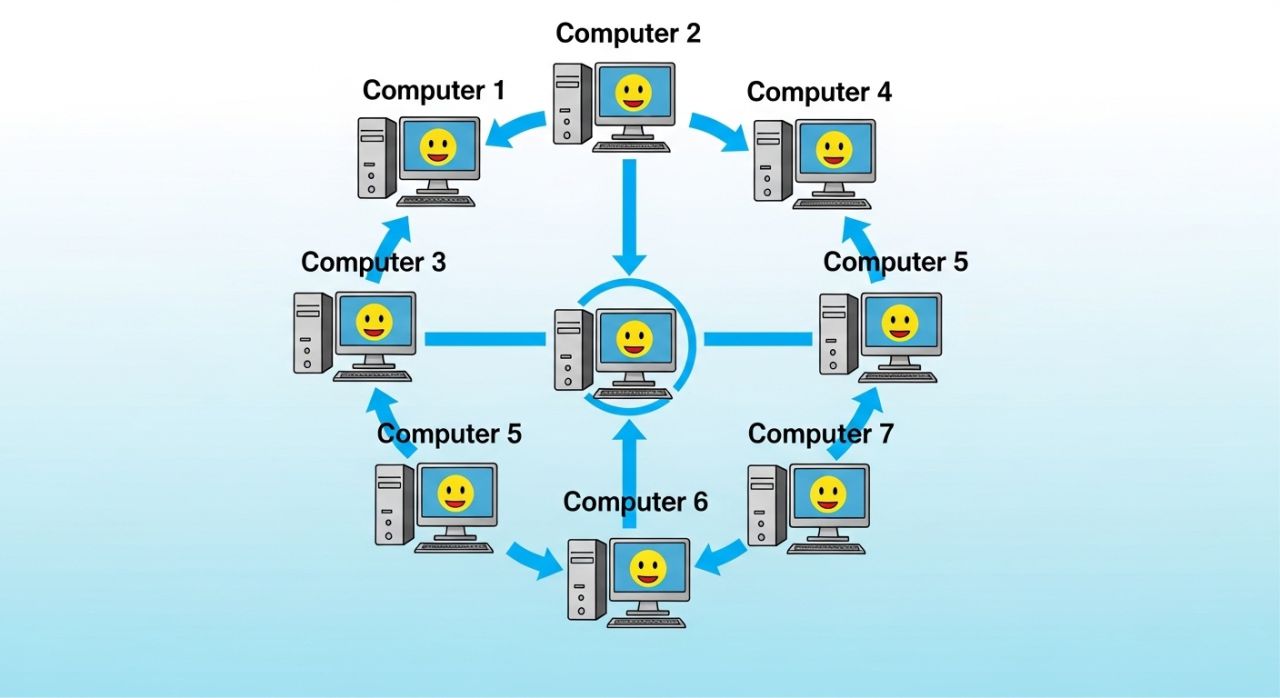
Ring network topology is a simple way to connect computers in a circle. Imagine your friends standing in a circle and holding hands. Each friend is linked to two others. In the same way, every computer connects to two nearby devices. This makes a closed loop. That loop is called a ring.
In a basic ring network diagram, you will see computers placed in a circle. Lines connect each device to the next one. There is no central hub in the middle. Instead, data moves around the circle from one device to another. Because of this clean shape, the system stays neat and organized.
Now, you may wonder where it fits among other LAN topology types. In local networks, we often see star, bus, and ring designs. A star uses one central device. A bus uses one main cable. However, ring network topology uses a circular path. Each design has strengths. Yet, ring topology is special because it controls traffic intelligently. That control improves network reliability and keeps things fair for every device.
Also, this setup helps in smoother network data transmission. Since every computer gets a turn, no one feels left out. That balance makes it a smart choice in many cases.
How Ring Network Topology Works
Let’s break it down step by step. Ring networks use a token-passing protocol. A small data signal, called a token, travels around the ring. Only the device holding the token can send data.
First, the token moves to a computer.
Next, if that computer has data, it sends it.
Then, it passes the token to the next device.
After that, the process repeats.
Because of this system, network data transmission flows in one direction around the circle. This is very important. It means devices do not talk at the same time. As a result, data crashes, also called collisions, are prevented.
So, the token passing protocol keeps everything calm and smooth. It reduces confusion. It improves order. And most importantly, it supports strong fault tolerance in networking when combined with smart planning, like dual rings.
In short, ring network topology is simple, structured, and reliable. It uses a circular design and smart control rules to move data safely. That is why many modern networks still trust it today.
Key Advantages of Ring Network Topology That Boost Network Reliability

Ring network topology is trusted because it keeps networks strong and steady. First of all, it offers strong network reliability. Since each device connects to two others, data has a clear path to follow. This clear path helps the system stay organized. As a result, businesses enjoy smoother work and fewer delays.
Another big benefit is its organized data flow. Data moves in one direction around the circle. Because of this design, devices do not send messages at the same time. Instead, they wait for their turn. This smart order improves network data transmission and keeps everything calm.
Also, every device gets equal access for all nodes. No computer is more important than another. Each one waits for the token and then sends its data. This fairness makes the system balanced and stable. It also supports better network performance optimization, especially in busy environments.
In addition, ring topology helps with reduced data collisions. Collisions happen when two devices try to send data at the same time. However, the token passing protocol stops this problem. Only one device can send data when it holds the token. Therefore, the network stays smooth and efficient.
Because of these features, ring network topology remains a smart option among different LAN topology types. It gives structure, order, and dependable performance.
Why It’s a Smart Choice for Structured Environments
Ring topology works best in places that need order. It uses a controlled traffic system. That means data follows rules. It moves step by step around the ring. Nothing happens by accident.
This setup also gives predictable performance. Since data moves in a fixed direction, network speed stays steady. Companies can plan their work without surprises. That is very helpful for schools, offices, and small factories.
Moreover, it is efficient for specific business setups. For example, environments that need steady communication and equal sharing of resources benefit the most. When combined with smart computer network design, it can even support better fault tolerance in networking.
In short, ring network topology boosts reliability, improves performance, and keeps traffic organized. That is why many modern networks still choose it today.
Ring Network Topology vs Other LAN Topology Types (Comparison Guide)
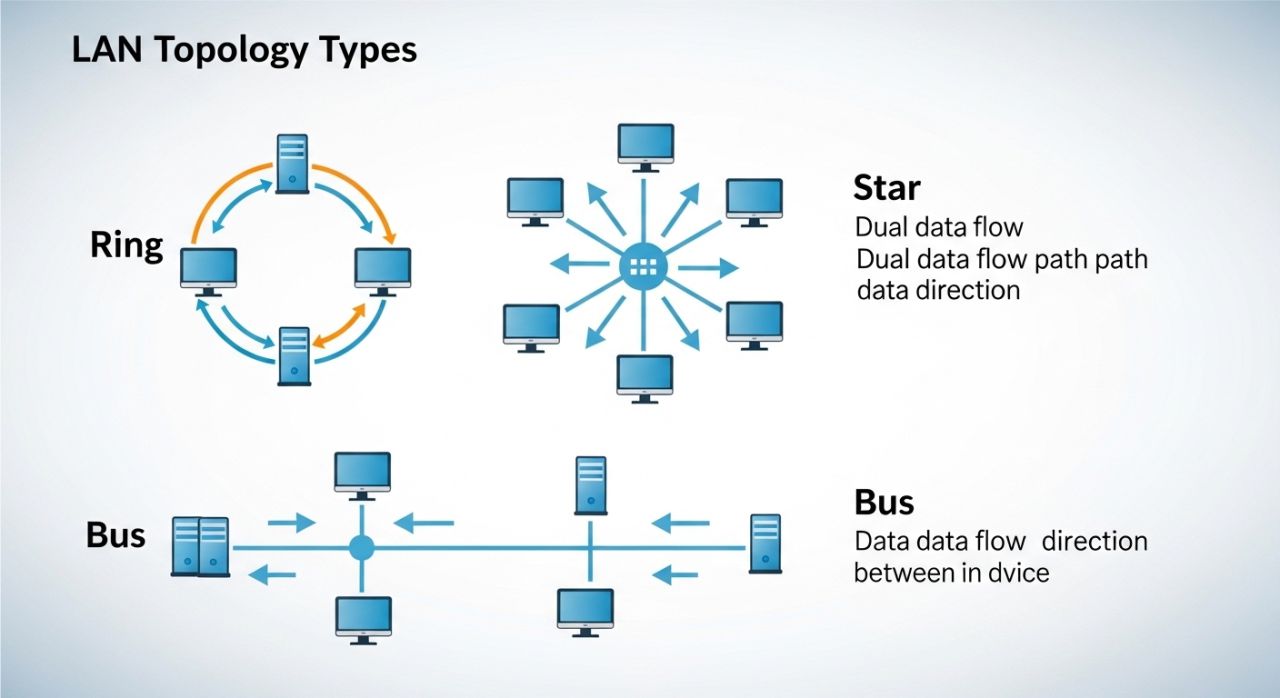
When it comes to building networks, you have many choices. Ring network topology is one option, but there are others like star and bus topologies. Understanding the differences helps you make smart decisions for your network. In this guide, we will compare these LAN topology types and explain when a ring network is the better choice.
Ring topology connects devices in a circular loop. Data moves in one direction using a token passing protocol. This design keeps traffic organized and reduces collisions. In contrast, star topology has a central hub. All devices connect to it, and data passes through the hub. Bus topology uses a single main cable, with all devices sharing the same line.
So, when should you choose a ring network topology over these other models? A ring is ideal when you need equal access for all nodes, predictable performance, and organized data flow. It is perfect for small to medium businesses, campuses, or environments where steady communication is important.
Star vs Ring Topology
Performance differences: In a star, the central hub can become busy and slow down the network. In a ring, data moves evenly around the circle, making traffic more predictable.
Fault tolerance comparison: If the hub fails in a star, the entire network stops. In a ring, one broken link can be solved with a dual ring topology, improving network redundancy.
Cost implications: Star networks require more cabling to connect all devices to the hub. Ring networks need less cabling overall, but maintenance can be slightly more complex.
Bus vs Ring Topology
Data transmission efficiency: Bus networks often face data collisions because all devices share the same line. Ring topology avoids this problem using the token passing protocol, ensuring smooth network data transmission.
Reliability comparison: Bus networks are vulnerable if the main cable breaks. Ring networks are more stable, especially with a dual ring setup for fault tolerance in networking.
Scalability factors: Adding devices to a bus network is easier, but it may slow it down. Ring networks require planning to add devices, but performance remains steady once added.
In summary, ring network topology provides a balanced combination of reliability, efficiency, and organized data flow. When compared with star and bus networks, it often proves the smarter choice for structured and performance-focused environments.
Understanding the Disadvantages of Ring Network Topology
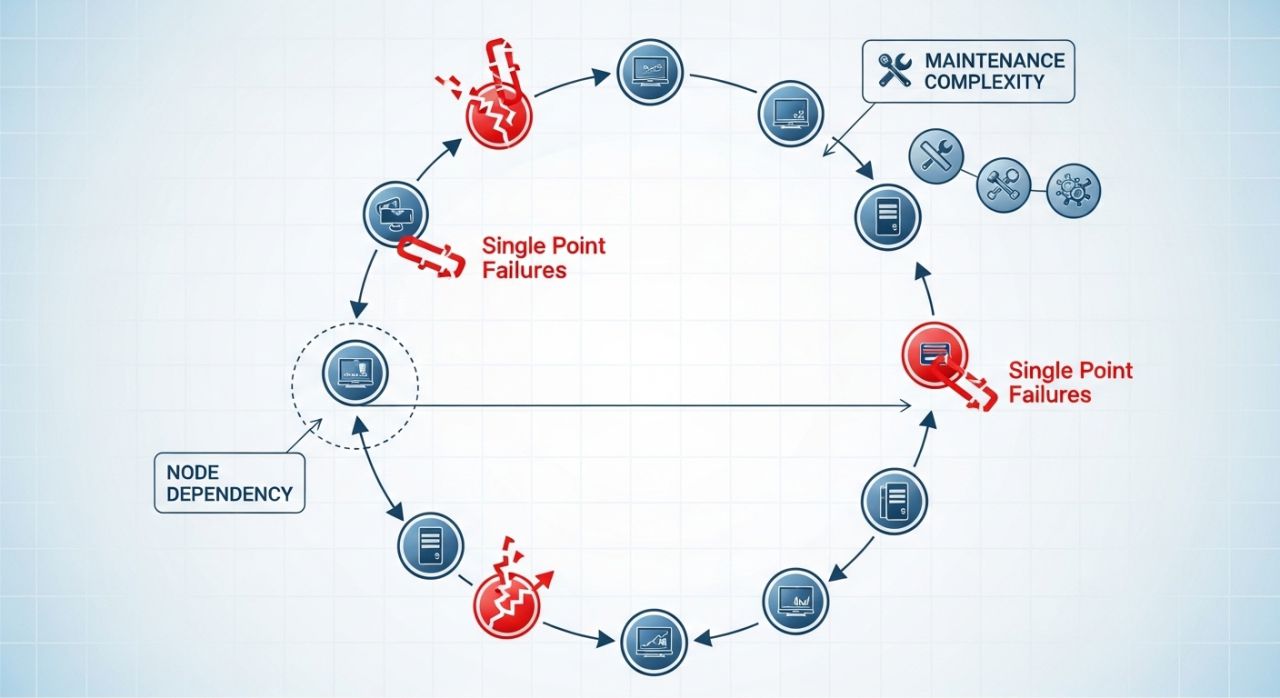
While ring network topology is smart and reliable, it is not perfect. Every system has limits, and knowing them helps you plan better. One of the main challenges is single-point failure risks. In a simple ring, if one device or connection breaks, the entire network can stop working. This is because each node depends on the next to pass data along the circle.
Another concern is node dependency challenges. Each device plays an important role. If one device slows down or fails, it can affect all other devices. This dependency makes planning and monitoring very important.
Additionally, ring networks can have maintenance complexity. Adding new devices or fixing broken links requires careful handling. You cannot just plug in a new device anywhere. The circular structure means each change must be planned so it does not disrupt the network.
Despite these disadvantages, there is a smart solution called dual ring topology.
How Dual Ring Topology Solves Reliability Issues
A dual ring topology adds a second loop alongside the first one. This extra ring acts as a backup. If one path fails, data can still travel through the second ring. This simple upgrade greatly improves network redundancy.
With dual rings, fault tolerance in networking becomes stronger. The network can continue running even when one node or connection has a problem. This makes it ideal for businesses and environments where uptime is crucial.
In short, while a single ring can face risks, upgrading to a dual ring topology solves most reliability issues. It keeps network data transmission smooth and ensures devices can communicate without interruption.
By understanding the limitations and using smart upgrades, ring network topology remains a reliable, efficient, and well-organized solution for modern networks. It balances performance, structure, and safety, making it a choice that professionals still trust today.
Real-World Examples of Ring Network Topology in Action

Ring network topology is not just a concept—it is widely used in real networks because it is organized, reliable, and efficient. One common example is in LAN networks. Small offices, schools, and libraries use ring designs to connect computers in a circle. Data moves step by step, following the token passing protocol, which keeps network data transmission smooth and prevents collisions.
Small businesses benefit from ring topology, too. Each device gets equal access for all nodes, ensuring fair and steady communication. This makes it ideal for offices where the workflow must stay uninterrupted. Using a dual ring topology adds a backup path, improving network redundancy and fault tolerance in networking.
Industrial environments also rely on ring networks. Factories, warehouses, and campuses need structured communication between machines, sensors, and computers. Ring topology ensures controlled traffic flow, reducing errors and boosting network performance optimization.
Even large campuses, like universities and hospitals, use ring networks to link multiple buildings. The circular structure supports reliable data transmission and keeps all departments connected without delays.
In all these cases, ring network topology proves its value. It balances performance, reliability, and order, making networks smarter and safer. From small businesses to industrial sites and campuses, ring topology ensures efficient communication, predictable performance, and strong network reliability.
Whether you are building a new office network or upgrading an existing system, choosing a ring network topology can provide a structured and dependable solution that continues to meet modern network demands.
How to Design a Ring Network Topology for Maximum Performance
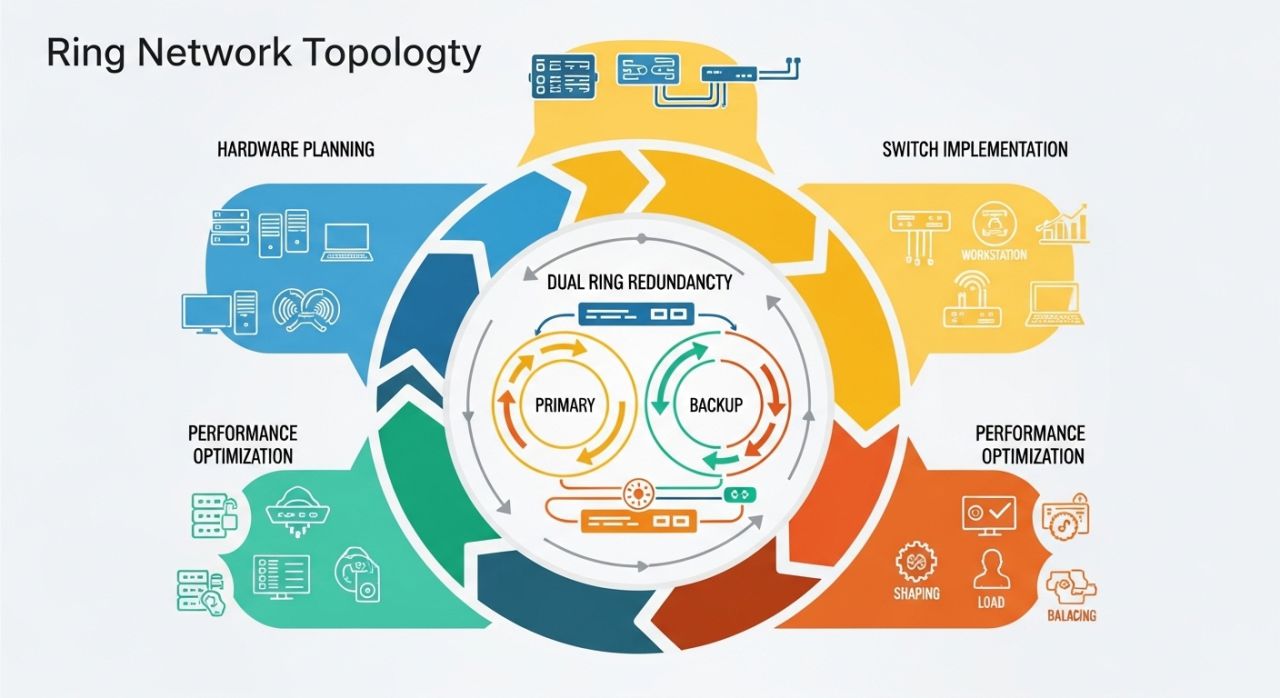
Designing a ring network topology may sound tricky, but with the right steps, it can be simple and smart. The key is to plan carefully and think about computer network design from the start. A good design ensures reliable performance, smooth network data transmission, and minimal problems.
The first step is choosing the right hardware and switches. Every device in the ring must connect properly to keep data flowing. Using quality switches helps manage traffic and keeps the token passing protocol working efficiently. This ensures that all devices get equal access for all nodes, reducing collisions and improving overall network performance optimization.
Next, you should focus on planning for redundancy. Single-ring networks can stop if one link fails. By using dual ring topology or backup connections, you can increase network reliability and support fault tolerance in networking. Redundancy keeps the network running even during unexpected failures.
Another important factor is optimizing performance and scalability. Place devices strategically and organize connections to prevent bottlenecks. Make sure the network can grow in the future. This is especially useful for businesses or campuses that may add more devices later.
Is Ring Topology Reliable for Large Networks?
Ring topology works well for small and medium setups, but large networks can face scalability limitations. Adding too many devices may slow data flow or make maintenance harder.
In such cases, a hybrid solution is often the best choice. Combining a ring with a star or mesh network allows you to expand the network without losing efficiency. This keeps the system structured, reliable, and high-performing.
In short, ring network topology can be carefully designed to provide maximum performance. By choosing the right hardware, planning redundancy, and considering future growth, your network will stay organized, reliable, and efficient, making it a smart choice for modern networks.
Ring Network Topology for Small Businesses: Is It the Right Fit?
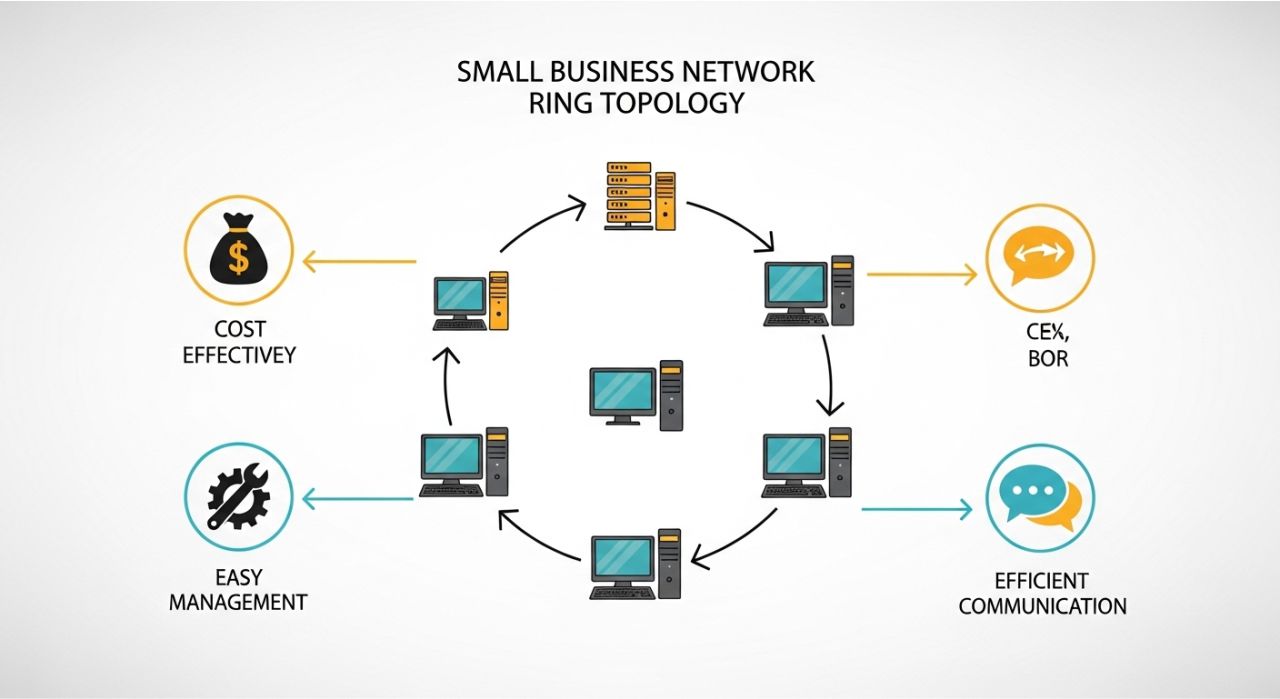
Ring network topology can be a smart choice for small businesses. It is cost-effective because it uses less cabling than some other LAN topology types, like star networks. Fewer materials mean lower setup costs.
Another benefit is ease of management. In a ring, data moves in an organized circle using the token passing protocol. Each device waits its turn, which keeps network data transmission smooth and predictable. This structure makes it easier for small business owners or IT staff to monitor the network without constant troubleshooting.
Ring topology often outperforms other LAN topologies in specific setups. For example, when a business needs equal access for all nodes and steady performance, a ring network is faster and more reliable than a bus network. It is especially useful in offices with multiple departments or shared resources where traffic must stay controlled.
For long-term maintenance, ring networks are practical but require planning. Adding new devices or fixing a broken connection should be done carefully to avoid disruptions. Using a dual ring topology can help improve network redundancy and fault tolerance in networking, ensuring the system continues running even if one connection fails.
In short, ring network topology provides small businesses with an organized, reliable, and efficient network. Its balance of low cost, smooth performance, and manageable structure makes it an excellent option for businesses that want a smart and dependable networking solution.
Final Thoughts: Is Ring Network Topology the Right Choice for You?
Now you can see why ring network topology is still a smart and reliable choice for modern networks. It offers strong network reliability and supports better network data transmission. It also uses a smart token passing protocol to keep data moving in order.
Because of this, traffic stays calm and organized. That is a big win for performance. In addition, upgrades like dual ring topology improve network redundancy and boost fault tolerance in networking. So even if one path breaks, the system can still work.
However, let’s be honest. Ring systems do have limits. If one device fails in a simple ring, the network may stop. Also, adding new devices can take time. That is why good computer network design is very important. When planned well, ring topology gives a strong balance of structure, reliability, and performance.
So, how do you decide? First, look at your current network. Then, do a quick topology comparison. Try checking the star vs ring topology to see which one fits your needs better. Think about your speed goals, budget, and safety needs. Clear thinking helps you make a smart choice.
Before you build or upgrade, consider talking to a network expert. A professional can guide you step by step.
Now it’s your turn!
Evaluate your network today. Compare it with ring topology. Share this post with your team. And don’t forget to comment below with your questions or ideas. Let’s build smarter networks together!