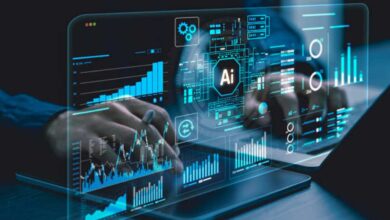
Work is changing, but not in the way many early predictions imagined. The future is not defined by a sudden replacement of people or a complete handover to machines. Instead, it is being shaped by a quieter shift: the steady rise of intelligent automation woven into everyday workflows.
This shift is less about speed alone and more about support. Intelligent automation is increasingly designed to work alongside people, reducing friction, preserving context, and making complex work easier to navigate. As industries become more knowledge-driven, this change is beginning to reshape how decisions are made, how teams collaborate, and how organizations learn from their own activity.
The future of work will not belong to automation alone. It will belong to those who understand how to integrate it thoughtfully.
From Mechanical Automation to Intelligent Support
Early forms of automation focused on repetition. Tasks were broken down into predictable steps and executed faster by machines. While effective in manufacturing and logistics, this approach struggled in environments where judgment, nuance, and context mattered.
Intelligent automation represents a different philosophy. Instead of replacing human effort outright, it supports it. It handles background processes, organizes information, and surfaces patterns that would otherwise be hidden. The work itself remains human-centered, but the burden of managing complexity is reduced.


This shift is particularly important as work becomes less linear. Modern roles often involve juggling information, coordinating across teams, and making decisions with incomplete data. Intelligent automation helps bring order to that complexity without flattening it.
How Work Is Being Reshaped Day to Day
The impact of intelligent automation is most visible in small moments. It appears when information is captured instead of forgotten, when context is preserved instead of reconstructed, and when decisions are informed by history rather than guesswork.
After the first layer of automation is in place, new capabilities emerge. For example, capturing spoken input through voice transcription allows conversations and ideas to be revisited later, reducing reliance on memory and informal notes. This kind of support does not change how people communicate; it simply ensures that meaning is not lost once the moment passes.
As these systems mature, daily work begins to feel less fragmented. People spend less time searching, clarifying, and repeating. They spend more time thinking, deciding, and creating.
Decision-Making in an Automated Environment
One of the most profound changes brought by intelligent automation is its influence on decision-making. Decisions rarely fail because of a lack of intelligence. They fail because of missing context, forgotten assumptions, or overlooked patterns.
Automation helps address these gaps by preserving information over time. Discussions, alternatives, and reasoning can remain accessible long after the decision itself is made. This allows organizations to learn not just from outcomes, but from the thinking that led there.
Better decisions emerge when people can see the full landscape. Intelligent automation provides that visibility without dictating conclusions. Judgment remains human, but it is supported by clearer inputs.
Productivity Without Burnout
For many workers, productivity has become synonymous with pressure. More output, tighter deadlines, constant availability. Automation was once seen as a way to accelerate this cycle.
Intelligent automation points in a different direction. By removing unnecessary friction, it allows people to work more sustainably. Repetitive coordination, manual organization, and redundant tasks can be reduced, freeing attention for higher-value work.
This does not mean working faster at all costs. It means working with fewer interruptions and less cognitive overload. Productivity becomes quieter, steadier, and more resilient.
Collaboration Across Boundaries
Work is increasingly distributed across time zones, disciplines, and organizations. Collaboration no longer depends on being in the same room or even working at the same time.
Intelligent automation supports this reality by preserving shared understanding. Conversations do not vanish when a meeting ends. Context does not disappear when a project changes hands. Knowledge can travel with the work.
This continuity is essential in environments where collaboration is asynchronous. Automation provides a common reference point, reducing misunderstandings and aligning efforts without constant coordination.
Knowledge Management Becomes Living, Not Static
Traditional knowledge management often focuses on storage. Documents were archived. Files were organized. Information was saved, but rarely revisited.
Intelligent automation shifts knowledge management from storage to use. Information becomes searchable by meaning rather than location. Patterns across time become visible. Past insights inform present action.
This turns organizational knowledge into a living system. Instead of starting from scratch, teams build on what already exists. Learning becomes cumulative rather than episodic.
The Role of Specialized Automation
Not all automation is general-purpose. Some tools are designed to address specific friction points within workflows. For instance, noscribe may be used in certain environments to preserve spoken context without interrupting discussion. When such tools are applied thoughtfully, they disappear into the background of work.
The key is integration. Tools that fit naturally into existing practices reduce friction. Those that demand constant attention often add it.
Skills That Matter More, Not Less
A common fear surrounding automation is the erosion of human skill. In reality, intelligent automation tends to increase the value of distinctly human abilities.
As routine tasks are handled by systems, skills like critical thinking, communication, ethical judgment, and creativity become more important. People are asked not just to execute, but to interpret, connect, and decide.
The future of work favors those who can work with intelligent systems rather than compete against them.
Designing Work Around Humans
The success of intelligent automation depends on design choices. Systems built without regard for human behavior often fail to deliver value. Those designed around real workflows tend to thrive.
Effective automation respects attention. It offers support without constant interruption. It provides transparency rather than opaque outputs. It allows correction and adaptation over time.
When automation is designed this way, trust grows. Adoption follows naturally.
Small Changes, Long-Term Impact
The rise of intelligent automation is not marked by dramatic moments. Its impact accumulates gradually.
Consider what changes when friction is reduced:
- Less time spent searching for information
- Fewer misunderstandings carried forward
- Greater continuity across projects and teams
Over months and years, these small improvements compound into significant organizational advantages.
A More Thoughtful Future of Work
The future of work shaped by intelligent automation is not one where humans step aside. It is one where they are better supported.
Work becomes clearer. Decisions become more informed. Collaboration becomes smoother. Knowledge becomes easier to carry forward.
Automation, when applied thoughtfully, does not remove meaning from work. It protects it.
Looking Ahead
As intelligent automation continues to evolve, its role will expand quietly but steadily. The organizations that benefit most will not be those that automate everything, but those that automate wisely.
The future of work is not about replacing people. It is about removing the barriers that prevent people from doing their best work.
And in that future, intelligence—human and artificial—will be at its most powerful when it works together.