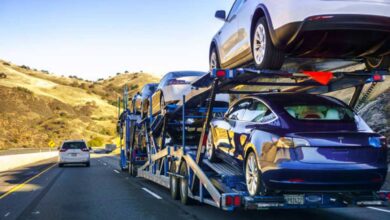
The number of EVs on US roads has grown sharply over the past few years, and so has the number of EV owners who need to ship their vehicles. Relocation, out-of-state purchases, and seasonal moves all raise the same question: what’s different about shipping an electric vehicle compared to a gas-powered car?
Some things are identical to a regular vehicle, but a few are not. Here’s what actually matters:
Battery Charge Level Before Pickup
Most auto transport carriers recommend shipping an EV at 40 to 60 percent charge. A full battery (100%) adds unnecessary thermal stress during transport when temperatures fluctuate. An empty battery creates problems if the vehicle needs to be driven or repositioned during the loading process.
Confirm the charge level policy with your carrier before scheduling pickup. Some carriers are specific about the range they want; others are more flexible. Knowing this upfront avoids a scramble on pickup day.


Weight and Trailer Positioning
EV batteries are heavy. A Tesla Model 3 weighs roughly 600 pounds more than a comparable gas-powered vehicle. This affects how many cars can be loaded on a single trailer, since total weight limits apply to the full load, and it occasionally means your EV gets assigned a specific position on the carrier rather than wherever there’s space.
For standard open transport, this usually isn’t an issue. Modern car carriers are built to handle variance in vehicle weights. It becomes more relevant for enclosed transport, where trailer configurations are tighter and weight distribution matters more. Let your car shipper know your vehicle’s make, model, and trim level when booking so they can match the right carrier.
Open vs. Enclosed Transport
Open transport handles the majority of EV shipments without issue. Vehicles are secured with wheel straps rather than frame contact points, so the undercarriage — where the battery pack sits — isn’t at risk during loading or transit. Weather exposure on an open carrier is the same for EVs as for gas vehicles.
Enclosed transport makes sense for high-value EVs: a Lucid Air, a top-spec Porsche Taycan, or a Rivian. For a daily-driver EV used for commuting, open transport is the right call.
Inoperable EVs Need Specialist Handling
If the EV doesn’t run or can’t be put in neutral (due to a dead or damaged battery pack) standard loading procedures won’t work. You’ll need a carrier with a flatbed or a winch system, and this has to be disclosed at the time of booking. Failing to mention an inoperable EV can result in the carrier arriving without proper equipment and either turning down the job or charging an unplanned fee.
Most major car shipping companies can accommodate inoperable EVs, but it narrows the carrier pool and may extend the pickup window by a few days. Budget for an inoperable vehicle surcharge of roughly $100 to $200 on most routes.
Charging Considerations
For door-to-door service, the carrier comes to your location. You don’t need any charging infrastructure on-site. If you’re using terminal-to-terminal service (dropping the vehicle at a central facility), confirm the terminal can move your car under its own power, which requires at least some remaining battery charge.
Door-to-door is the standard choice for most EV owners, and it avoids this issue entirely.
What to Tell the Car Shipping Company at Booking
Be clear about the following when you book: the vehicle’s make, model, and trim (battery size and vehicle weight both affect carrier matching); whether the vehicle is operable; your preferred charge level at pickup; and whether you want open or enclosed transport. A company with a large carrier network has more options for matching your EV to a carrier equipped to handle it correctly.
RoadRunner Auto Transport handles EVs across all vehicle types, from standard commuter models to high-value performance vehicles, with both open and enclosed options available. Their car shipping calculator handles EV shipments and returns a quote in under 60 seconds.
What’s the Same as Shipping a Gas Vehicle
The documentation process is identical. You’ll complete a Bill of Lading at pickup and delivery, and you should photograph the vehicle’s exterior before it’s loaded. Insurance during transport works the same way — the carrier’s cargo policy covers the vehicle while it’s on the trailer. Delivery windows and route timing are no different from standard auto transport.
Most of what makes EV shipping distinct comes down to battery management and vehicle weight. Once you’ve accounted for those, the rest is standard process.
If you’re ready to ship, you can get a quote in under a minute and pick your dates!