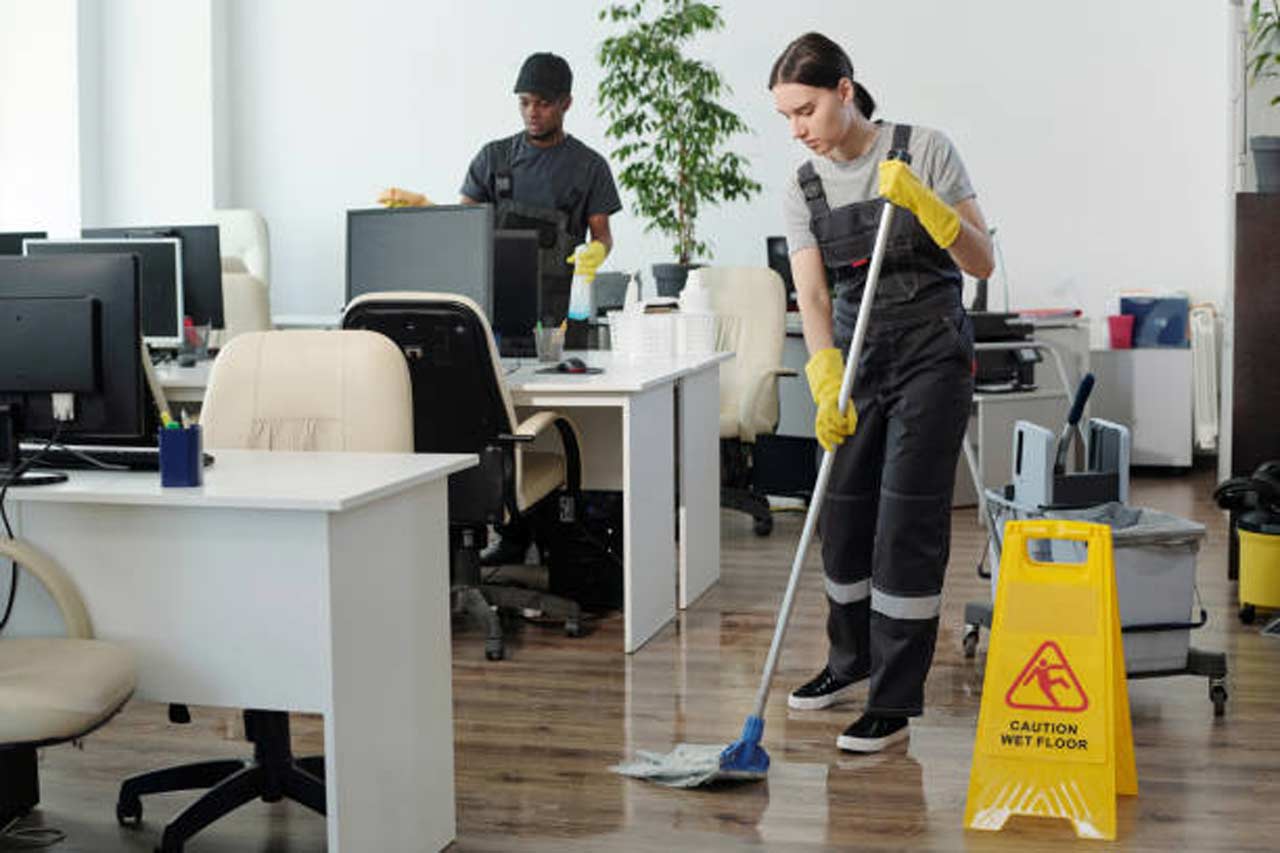
 Most offices don’t fall apart overnight. Instead, cleanliness slips gradually, one missed dusting or delayed carpet clean at a time. By the time it’s obvious, the damage to employee health, morale, and client impressions has usually already started.
If you’re not sure whether your current cleaning routine is keeping up, here are seven signs it’s time for an upgrade — and what office cleaning typically includes when done right.
1. Employees Are Getting Sick More Often
A noticeable uptick in sick days is one of the clearest signs that surfaces and shared equipment aren’t being disinfected often enough. Germs spread fast in enclosed offices, especially on keyboards, phones, shared printers, and doorknobs. If illness seems to move through the office in waves, disinfection frequency is usually the first thing worth reviewing.
2. The Air Feels Stuffy or Smells Off
If your office air feels heavy or has a lingering odor, dust and allergens are likely building up in the HVAC system and vents. This usually means it’s been too long since a deep clean of ductwork, carpets, and upholstery, all of which trap airborne particles over time.
3. Carpets and Floors Look Dull
Foot traffic wears floors down fast. Dull, stained, or gritty-feeling carpets and hard floors are a sign that routine vacuuming and mopping aren’t being paired with periodic deep extraction. Left unaddressed, this kind of wear also shortens the usable life of flooring materials, turning a maintenance issue into a costly replacement.


4. Clients Comment on the Space — and Not in a Good Way
If visitors mention clutter, dust, or a messy reception area, that feedback is worth taking seriously. First impressions form in seconds, and a neglected lobby undercuts an otherwise professional image, no matter how strong the actual work being done inside the office is.
5. Restrooms Are a Recurring Complaint
Restrooms take the most abuse in any office and need attention multiple times a day, not once. If they’re a frequent source of employee complaints, the current schedule likely isn’t frequent enough, and this is often one of the fastest issues to fix once identified.
6. Cleaning Only Happens When Someone Complains
Reactive cleaning — fixing a mess after someone notices it — means problems have already affected the people who work there. A properly run program prevents issues before they’re visible, rather than treating cleanliness as a response to complaints.
7. There’s No Clear Cleaning Schedule at All
If nobody in the office can say how often specific areas get cleaned, that’s the biggest red flag of all. A dependable routine needs a defined scope: daily tasks, weekly tasks, and monthly deep cleans, documented clearly enough that anyone in the office could describe it.
How to Start the Conversation With a Provider
When reaching out to a potential provider, it helps to come prepared with specifics: current pain points, approximate square footage, occupancy patterns, and any facility-specific needs like a server room or a break area with heavy food traffic. Providers can quote more accurately, and faster, when they’re not starting from a blank slate.
Bonus Sign: Nobody Owns the Relationship
Beyond the seven signs above, one more issue often flies under the radar: no single person in the office is responsible for managing the cleaning vendor relationship. When feedback has nowhere clear to go, small issues never make it back to the provider, and the same problems repeat month after month without resolution.
How Often Is “Often Enough”?
One of the most common questions office managers ask is how frequently different areas actually need attention. The answer depends heavily on foot traffic and facility type, but as a general guide:
- High-traffic areas like restrooms, breakrooms, and entryways typically need daily service, sometimes multiple times a day.
- Workstations and shared desks benefit from daily surface wipe-downs, especially in hot-desking environments.
- Carpets and upholstery hold up best with weekly vacuuming paired with deep extraction every one to three months.
- Windows and glass partitions in modern open-plan offices usually need attention weekly to avoid visible smudging.
What Happens When Businesses Wait Too Long
Offices that delay addressing these signs often find the fix more disruptive than it needed to be. A carpet that could have been maintained with routine extraction may need full replacement. A restroom complaint that could have been solved with an added midday service becomes an employee relations issue. Catching these signs early keeps the solution simple and the cost manageable.
What a Solid Cleaning Program Looks Like
A well-run commercial cleaning routine typically includes:
- Daily disinfection of high-touch surfaces like doorknobs, light switches, and shared equipment.
- Restroom servicing multiple times per day in higher-traffic offices.
- Regular floor care, including vacuuming, mopping, and scheduled deep extraction.
- Trash removal and recycling handled consistently, not just when bins overflow.
- Periodic deep cleaning of carpets, upholstery, and vents on a monthly or quarterly basis.
- Clear communication channels so issues can be flagged and resolved quickly between scheduled visits.
Why It’s Worth Fixing Sooner Rather Than Later
Offices that let cleaning slide rarely notice the cumulative cost until it shows up somewhere expensive: a flooring replacement years ahead of schedule, a run of sick days during a busy quarter, or a client who quietly takes their business elsewhere after an unimpressive visit.
The Bottom Line
If any of these signs sound familiar, it’s worth reassessing your current cleaning arrangement. A structured, recurring program costs less in the long run than the sick days, wear and tear, and lost first impressions that come with letting things slide.
Fixing a cleaning routine doesn’t require a complete overhaul overnight. Most offices see the biggest improvement simply by moving from an informal or infrequent arrangement to a documented schedule with clear ownership — the rest tends to follow once that foundation is in place.
Companies like https://naecleaningsolutions.com/ build cleaning schedules around how a space is actually used, which is usually the difference between an office that looks maintained and one that just gets by.