Shocking Mistakes Destroying Your Small Business Growth Strategy (And How to Fix Them)
Discover the hidden errors stopping your business growth and learn actionable fixes to boost revenue, customers, and performance.

Many small businesses don’t fail because of competition — they fail because of hidden strategic mistakes. That may sound surprising. However, it’s true.
A business can have a great product and still struggle. Why? Because the plan for growth is weak. You may notice slow revenue growth. You may see stagnant customer growth. Sometimes, you just feel confused. The direction is unclear. The goals are blurry. And without clear goals, even the best ideas can fall apart.
So what’s really going wrong?
Often, the problem lies in your small business growth strategies. Many owners jump into marketing without proper business growth planning. They try random ads and copy competitors to chase quick sales instead of building sustainable business growth. As a result, profits stay small. Energy gets wasted. Frustration grows.


But here’s the good news.
You can fix this.
In this guide, we will uncover the most damaging mistakes hurting your small business growth strategies. More importantly, you will learn simple and clear solutions. You will discover smarter customer acquisition strategies, better revenue growth strategies, and practical ways to improve your business performance optimization. Step by step, we will turn confusion into clarity.
Growth is not magic. It is a system. And when you understand the system, your business can grow stronger, faster, and smarter. Let’s find out what might be secretly holding your business back — and how to fix it today.
Mistake #1 – Building Small Business Growth Strategies Without Clear Goals

Many owners work very hard. They wake up early. They sleep late. Yet, their business does not grow. Why? They build small business growth strategies without clear goals. That is like driving a car with no map. You move, but you do not know where you are going.
This mistake is common. However, it is also dangerous.
When you skip proper strategic planning, your business growth planning becomes weak. You may try new marketing ideas. You may launch offers. But without direction, results stay small. Slow revenue and poor customer acquisition follow. Soon, frustration grows.
Why Undefined Goals Kill Business Growth
First, many businesses have no measurable KPIs. KPIs are simple scoreboards. They show if you are winning or losing. Without them, you only guess. And guessing is risky.
Second, there are no clear revenue targets. If you do not know how much money you want to earn, how will you reach it? The same is true for the customer acquisition strategy. If you do not set a target for new customers, growth becomes random.
As a result, your revenue growth strategies feel messy. Your team feels confused. And your business performance slows down.
Clear goals give power. Unclear goals create chaos.
How to Fix It
The good news? This problem is easy to fix.
Start with the SMART goal framework. Make goals Specific, Measurable, Achievable, Relevant, and Time-bound. For example, instead of saying, “I want more sales,” say, “I will increase monthly revenue by 15% in 3 months.” Now that is clear.
Next, align your growth strategy framework with your long-term vision. Ask yourself: Where do I want my business to be in three years? Then build steps that lead there. This creates sustainable business growth, not quick wins that fade away.
Finally, write everything down. Create a simple and practical plan. Track your numbers every month. Adjust when needed. That is smart business performance optimization.
Remember, strong small business growth strategies always start with clear goals. When you know your target, you move faster. You waste less time. And most importantly, you grow with confidence.
Mistake #2 – Ignoring Market Research and Customer Insights

Many business owners work hard on their small business growth strategies. They create ads, post online, and offer discounts. But still, sales stay low. Why? Because they ignore market research and real customer insights.
Think of it like this. If you bake a cake without asking what flavor people like, they may not eat it. The same happens in business. When you do not understand your audience, your customer acquisition strategy becomes weak. As a result, your market penetration strategy fails. And growth slows down.
Smart business growth planning always starts with knowing your market.
Signs You Don’t Understand Your Target Market
First, you see poor lead generation results. You run ads. You share content. Yet, very few people respond. This means your message does not match what customers want.
Second, you notice weak brand positioning. People feel confused about what you offer. They do not see why you are different from competitors. When this happens, trust drops. Sales drop, too.
Also, you may attract the wrong customers. They complain more. They leave quickly. This hurts your revenue growth strategies and damages long-term success.
These are clear warning signs.
How to Fix It
The good news? You can fix this step by step.
Start with competitor analysis. Look at other businesses in your market. What do they do well? Where are they weak? This helps you build a smarter competitive business strategy.
Next, improve your customer acquisition strategy. Talk to your customers. Ask simple questions. What problems do they face, and what do they like or dislike? Their answers give you power.
Then, use data for smarter decisions. Track clicks, sales, and feedback. When you use real numbers, your business performance optimization becomes stronger. You stop guessing. You start planning.
Finally, adjust your small business growth strategies based on what you learn. Clear insights lead to better offers. Better offers lead to more sales.
Remember, growth becomes easy when you truly understand your market. Listen first. Plan smart. Then act with confidence.
Mistake #3 – Focusing on Sales Instead of Sustainable Business Growth
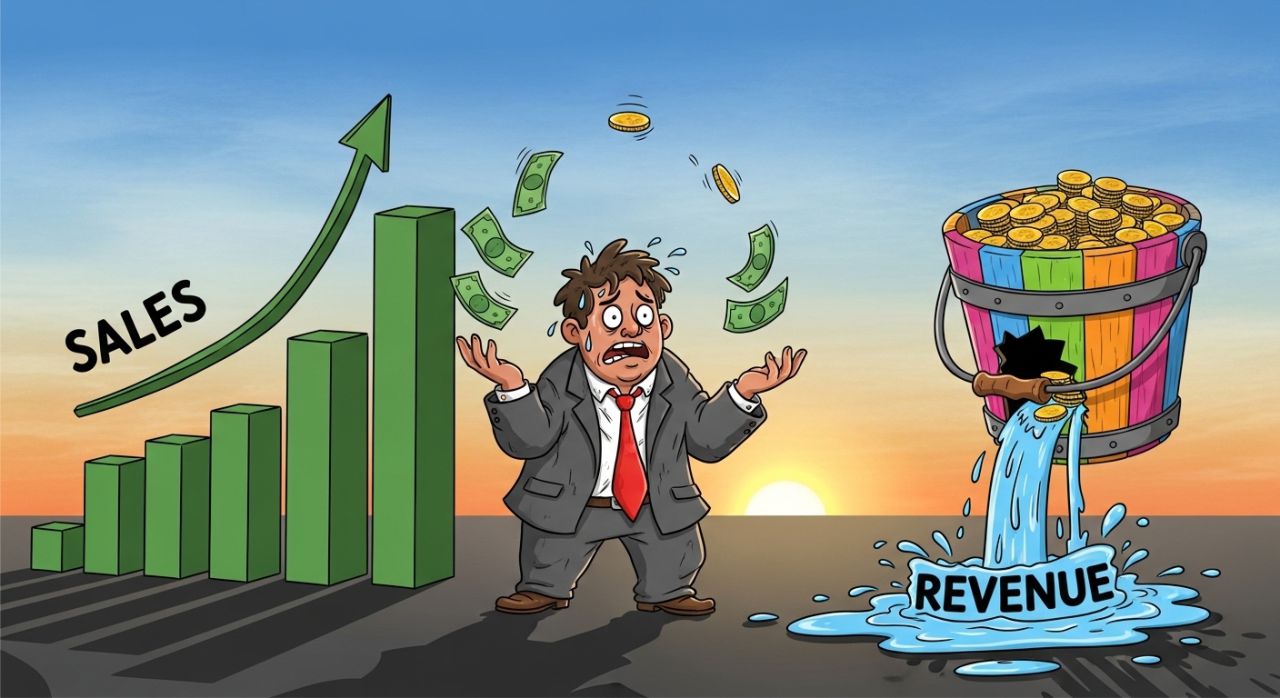
Many small business owners think growth means selling more products faster. They focus on quick sales, hoping revenue will rise immediately. But here’s the truth: chasing short-term gains often hurts your small business growth strategies in the long run. When you only aim for fast money, your business can burn out. Customers leave. Profits stay small.
Growth is not just about selling today. It’s about building a sustainable business that keeps growing tomorrow.
Short-Term Revenue vs. Long-Term Profit Growth
One common problem is discount dependency. Businesses rely on heavy discounts to attract customers. It works for a day. But soon, customers expect discounts every time. Profits shrink, and your revenue growth strategies fail.
Another issue is high churn rates. Customers buy once and never return. You spend time and money attracting them, but they leave. That slows your business performance optimization and makes long-term planning hard.
Focusing only on immediate sales is like filling a bucket with water that has holes. You pour energy in, but it leaks out before it fills.
How to Fix It
The solution is simple but powerful. First, use retention-focused revenue growth strategies. Keep your existing customers happy. Offer excellent service. Follow up. Happy customers return and even refer others.
Next, build recurring income streams. Subscriptions, memberships, or service contracts bring steady revenue. This makes your business more predictable and strong.
Finally, adopt sustainable business growth models. Balance marketing, operations, and customer experience. Plan for the future, not just today. Focus on long-term profit growth rather than chasing every quick sale.
When you shift your focus from immediate sales to sustainable business growth, your small business growth strategies become stronger. Customers stay longer. Revenue grows steadily. And your business becomes resilient, ready to scale with confidence.
Remember, real growth is a marathon, not a sprint. Short-term wins are tempting, but long-term success comes from smart planning, retention, and sustainable revenue streams.
Mistake #4 – Poor Marketing Execution in Your Small Business Growth Strategy

Marketing is one of the most important parts of small business growth strategies. Yet many businesses fail here. They spend money on ads and social media but see little result. Why? Because their marketing execution is poor. Without a smart plan, even great products can stay unnoticed.
Marketing is not just posting online. It is about connecting with the right people. It is about showing why your business is different. When marketing fails, lead generation slows. Growth slows, too.
Ineffective Small Business Marketing Strategy
A common mistake is having no content marketing plan. Businesses post randomly. Sometimes, there is no blog, video, or social post strategy. Customers do not get the information they need. They lose interest.
Another problem is inconsistent branding. Your logo, message, and style may change across channels. People get confused. They cannot remember your business. When your brand is weak, even the best offers can fail.
Both of these issues hurt your customer acquisition strategy and stop long-term business growth.
How to Fix It
The good news? You can fix this with a few smart steps. First, use multi-channel lead generation strategies. Combine social media, email, blogs, and paid ads. Reach customers where they spend time. This improves visibility and engagement.
Next, improve your brand positioning strategy. Make your message clear and consistent. Show why your product or service is different. People remember strong brands. Strong brands attract more customers.
Finally, focus on optimizing marketing ROI. Track which ads, posts, and campaigns bring results. Stop spending on what does not work. Invest in what brings customers and revenue.
When you fix marketing execution, your small business growth strategies become powerful. You attract more leads. Customers trust your brand. Sales grow steadily.
Remember, marketing is not just advertising—it is building connections, trust, and long-term growth. With clear planning, consistent branding, and smart strategy, your business can reach more people and achieve sustainable success.
Mistake #5 – Trying to Scale Without Operational Efficiency

Many business owners dream of fast growth. They want more sales, more customers, and more revenue. But here’s the catch: scaling without operational efficiency can destroy your small business growth strategies. Growth is exciting, but without strong systems, it leads to chaos.
When operations are weak, problems multiply. Employees get stressed. Customers get frustrated. Money gets wasted. Even a good business can fail if it grows too fast without proper planning.
Growth Without Systems = Chaos
One big problem is burnout. Owners and staff work long hours trying to keep up. Tasks pile up. Mistakes happen. Everyone gets tired.
Another issue is customer dissatisfaction. Orders get delayed. Service slows down. Customers leave. Negative reviews appear. This damages your brand positioning strategy and slows revenue growth strategies.
Also, cash flow issues become common. Without systems to manage money, you spend more than you earn. Even profitable sales can cause financial stress.
All of this happens when you focus on growth but ignore business performance optimization.
How to Fix It
The solution is simple: improve operational efficiency. First, look at your processes. Remove unnecessary steps. Make workflows clear. This reduces mistakes and saves time.
Next, use automation tools. Software can handle repetitive tasks like invoicing, email follow-ups, or inventory management. Automation reduces errors and frees up time to focus on real growth.
Finally, create a streamlined business development strategy. Plan each step of growth carefully. Coordinate marketing, sales, and operations. Track results regularly. Adjust strategies when needed.
When you improve operations, your small business growth strategies become stronger. Employees work smarter, not harder. Customers are happy. Revenue grows steadily.
Remember, fast growth without systems is risky, but growth with strong operations is powerful. Focus on efficiency, automate where possible, and plan carefully. This way, your business scales smoothly and sustainably.
Mistake #6 – Not Tracking Performance or Adjusting Your Growth Strategy

Many business owners create small business growth strategies and then forget about them. They hope everything will work automatically. But this “set it and forget it” approach is dangerous. Growth does not happen by chance. Without tracking and adjusting, your business can drift off course.
When you ignore performance, small problems turn into big ones. Marketing may fail. Sales may drop. Even your best ideas can stop working. That’s why strategy optimization is so important.
The Danger of “Set It and Forget It”
First, many businesses have no performance metrics. They don’t track leads, sales, or revenue properly. Without numbers, you don’t know what works. You cannot tell if your customer acquisition strategy is successful or failing.
Second, owners rely on guesswork decisions. They try random campaigns or new offers without analyzing results. This wastes time, energy, and money. Slow growth becomes the norm, and your revenue growth strategies stall.
Without real data, even experienced owners make mistakes. Guessing is risky.
How to Fix It
The solution is simple: track, review, and adjust. Start with monthly strategy reviews. Set aside time to check progress. Look at what worked and what didn’t. Make small improvements.
Next, use business performance optimization dashboards. These tools show your KPIs in one place. Leads, sales, expenses, and customer feedback are easy to see. Dashboards give clarity and help you act fast.
Finally, practice data-driven decision making. Base your choices on facts, not assumptions. Analyze trends. Adjust campaigns. Improve offers. This approach strengthens your small business growth strategies and ensures consistent results.
Remember, growth is not a one-time effort—it’s an ongoing process. Track your progress, learn from results, and improve every month. When you actively measure and adjust, your business grows faster, smarter, and more sustainably.
Tip: Don’t guess. Check your numbers. Adjust your plan. Make your strategy work for you, not against you.
Mistake #7 – Underestimating Competitive and Market Changes

Many small business owners focus only on their own plans. They work hard on small business growth strategies, but forget to watch the market. This is risky. Businesses do not grow in a vacuum. Competitors change. Customers change. Technology changes. Ignoring these shifts can make your strategies fail.
When growth plans are static, even good ideas can become outdated. Your business may miss opportunities or lose customers. That’s why adapting to market changes is key for competitive business strategy and long-term success.
Why Static Growth Plans Fail
First, industry shifts can surprise businesses. A new competitor may offer better prices or faster service. Customer preferences may change. If you stick to old methods, you lose relevance.
Second, digital transformation is reshaping markets. Online shopping, apps, and social media change how people buy. Businesses that ignore these trends fall behind. Even loyal customers may switch to more modern competitors.
Static growth plans create risk. They slow down market penetration strategies and make your business fragile.
How to Fix It
The solution is simple: stay flexible and proactive. Begin with competitive business strategy refinement. Regularly analyze competitors. Identify their strengths and weaknesses. Adjust your offers and marketing to stay ahead.
Next, update your market penetration strategy. Adapt your messaging, pricing, and distribution to meet current customer needs. Test new ideas often. Keep your strategies aligned with market trends.
Finally, focus on continuous innovation planning. Experiment with new products, services, or ways to deliver value. Encourage your team to share ideas. Innovation keeps your business relevant and competitive.
When you adapt to changes, your small business growth strategies become stronger. You can respond to shifts, attract more customers, and stay ahead of competitors.
Remember, static plans fail, but flexible strategies thrive. Watch the market. Update your growth strategies. Innovate continuously. This way, your business not only survives but grows smartly and sustainably.
How to Build Small Business Growth Strategies That Actually Work

Creating small business growth strategies is not magic. Many owners try random tactics and hope for results. But smart growth comes from a clear plan. When done right, your business grows faster, earns more, and stays strong over time.
The key is to follow a simple, step-by-step approach. This makes business growth planning easy, even for beginners.
Step-by-Step Small Business Growth Strategy Guide
1. Define measurable goals – Start by setting clear targets. Use SMART goals, so you know exactly what success looks like. For example, “Increase monthly revenue by 15% in 3 months.”
2. Understand your ideal customer – Research who your customers are. Learn what problems they have and what they value. This strengthens your customer acquisition strategy.
3. Strengthen brand positioning – Make your message clear. Show why your business is different. Strong branding builds trust and makes people remember you.
4. Build scalable systems – Set up processes that can grow with your business. Use automation tools and efficient workflows. This ensures smooth operations and prevents burnout.
5. Track, analyze, optimize – Regularly review your results. Use dashboards or reports to see what works. Adjust your revenue growth strategies based on real data. Continuous improvement leads to steady, long-term growth.
Small Business Growth Strategy Examples
Let’s look at two examples:
Service-based business – A digital marketing agency wants to grow. First, they define a goal: gain 10 new clients per month. Next, they research ideal clients, craft a clear brand message, and automate campaign management. Finally, they track results monthly and adjust their offers.
Product-based startup: a handmade soap business wants to expand online. They set a goal: increase online sales by 20% in 3 months. They learn their customers’ preferences, refine their branding, streamline shipping and inventory, and track website traffic and sales data. Each step guides smart growth.
By following this approach, your small business growth strategies stop being random. Instead, they become actionable, measurable, and effective.
Remember, smart planning, understanding your customers, strong branding, scalable systems, and continuous optimization are the pillars of business success. When you combine them, your business not only grows but thrives in a competitive market.
Turn Your Small Business Growth Strategies Into a Winning Plan
Now you know the truth. Many businesses struggle not because of competition, but because of poor planning, weak market research, bad marketing execution, and no clear goals. These mistakes hurt your small business growth strategies. They slow revenue to stop customer acquisition and create confusion instead of clarity. However, here’s the powerful part — every growth problem is fixable.
Yes, fixable.
When you use smart business growth planning, clear goals, and strong revenue growth strategies, things begin to change. When you improve your customer acquisition strategy and focus on sustainable business growth, your business becomes stronger. Also, when you track results and adjust your growth strategy framework, you stop guessing. Instead, you start leading.
Growth is not luck. It is not magic. It is a system. And systems can be built.
So now, take action. Be proactive. Use strategic business planning. Review your goals. Improve your marketing. Strengthen your operations. Step by step, you will see progress. Small smart moves create big results over time.
Ready to stop guessing and start growing?
Audit your current small business growth strategies today. Pick just one mistake from this list. Then fix it within the next 7 days. That simple step can change your direction.
Remember, sustainable growth begins with intentional strategy. If you want consistent, scalable results — start treating growth as a system, not a hope. Your business deserves smart growth. And you have the power to build it.